Frederic Melton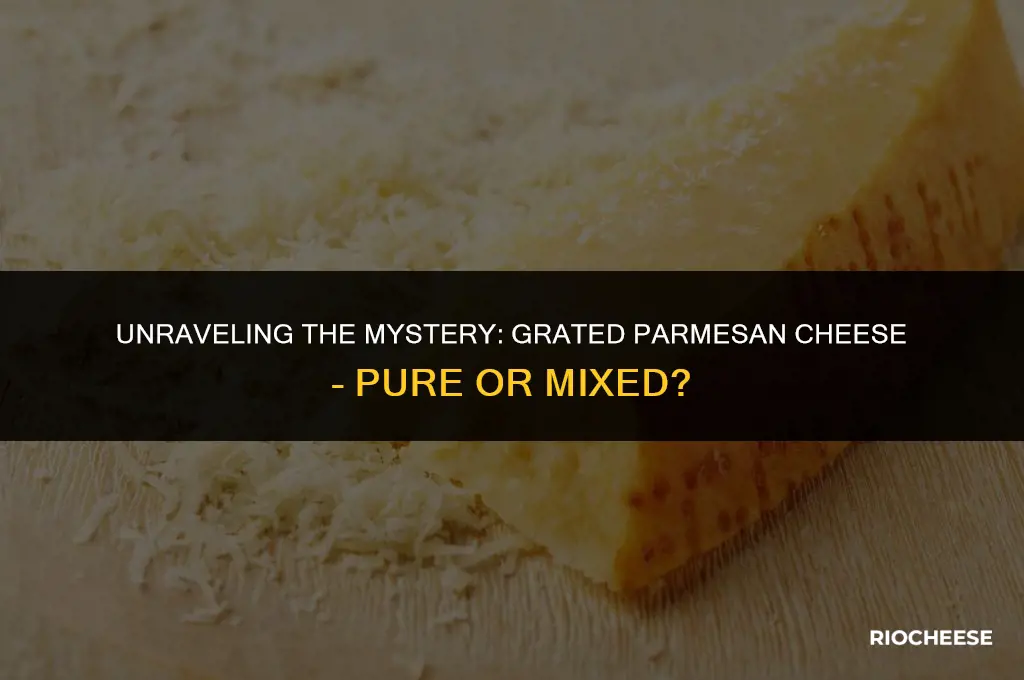
To introduce the topic Is grated Parmesan cheese a pure substance or mixture?, we need to delve into the fundamental concepts of chemistry and food science. A pure substance is defined as a material that consists of only one type of particle, whereas a mixture is composed of two or more different substances combined together. Grated Parmesan cheese, a popular culinary ingredient, is derived from Parmesan cheese, which is primarily made from cow's milk, salt, and rennet. During the grating process, the cheese is broken down into smaller particles, but its composition remains largely unchanged. Therefore, grated Parmesan cheese retains the characteristics of a mixture, as it contains a combination of proteins, fats, carbohydrates, and minerals present in the original cheese. This introduction sets the stage for a more in-depth exploration of the chemical composition and properties of grated Parmesan cheese.
Explore related products


What You'll Learn

Definition of pure substances and mixtures
Pure substances are those that consist of only one type of particle, whether they are atoms, molecules, or ions. They have a uniform composition throughout and exhibit consistent physical and chemical properties. For example, water (H2O) is a pure substance because it is composed of only water molecules, and its properties, such as boiling point and freezing point, are constant.
Mixtures, on the other hand, are combinations of two or more different substances that are not chemically bonded together. They can be homogeneous, meaning they have a uniform appearance and composition throughout, or heterogeneous, meaning they have visible differences in composition and properties. For instance, a solution of sugar in water is a homogeneous mixture, while a salad is a heterogeneous mixture.
When considering grated Parmesan cheese, it is important to understand that cheese is a dairy product made from milk. The process of making cheese involves coagulating milk proteins, separating the curds from the whey, and then aging the curds. During this process, various substances are added to enhance flavor, texture, and preservation, such as salt, enzymes, and sometimes mold.
Grated Parmesan cheese, specifically, is a mixture of these various components. It contains the proteins, fats, and other molecules that make up the cheese, as well as any additional substances that were added during the cheese-making process. Therefore, grated Parmesan cheese is not a pure substance but rather a mixture.
In conclusion, while pure substances consist of only one type of particle and have uniform properties, mixtures are combinations of different substances with varying compositions and properties. Grated Parmesan cheese falls into the category of a mixture due to its complex composition and the various substances involved in its production.
Exploring the Richness: Fontina vs. Parmesan Cheese Comparison
You may want to see also
Explore related products


Composition of grated Parmesan cheese
Grated Parmesan cheese is primarily composed of finely shredded pieces of Parmesan cheese. Parmesan cheese itself is a hard, aged cheese made from cow's milk, salt, and rennet. The aging process, which can last from 12 to 36 months, contributes to its distinctive flavor and texture. During this time, the cheese develops a granular texture and a sharp, nutty taste.
The process of grating Parmesan cheese involves shredding the hard cheese into fine or coarse particles. This can be done using a grater or a food processor. The resulting grated cheese is often used as a topping for pasta dishes, salads, and soups, or as an ingredient in various recipes.
From a chemical perspective, grated Parmesan cheese is a mixture of various compounds. It contains proteins, fats, carbohydrates, and minerals such as calcium and phosphorus. The proteins in the cheese are primarily casein and whey proteins, which are responsible for its structure and texture. The fats in Parmesan cheese are mostly saturated fats, which contribute to its rich flavor.
In terms of its purity, grated Parmesan cheese is considered a mixture rather than a pure substance. This is because it is made up of different components that have been combined during the cheese-making process. Additionally, some grated Parmesan cheeses may contain additives such as cellulose powder to prevent clumping, which further classifies them as mixtures.
When considering the composition of grated Parmesan cheese, it is important to note that the quality and characteristics of the cheese can vary depending on factors such as the type of milk used, the aging process, and the grating method. High-quality Parmesan cheese is typically made from whole cow's milk and aged for a longer period, resulting in a more complex flavor profile and a finer texture when grated.
Exploring the Halal Status of Coles Parmesan Cheese
You may want to see also
Explore related products


Presence of additives or preservatives
Grated Parmesan cheese, a staple in many culinary dishes, often contains additives or preservatives to enhance its shelf life and maintain its texture. One common additive is cellulose powder, which prevents the cheese from clumping. This is particularly important for grated cheese, as it needs to remain free-flowing for easy use. Without such additives, the cheese would likely form hard blocks, making it difficult to sprinkle over pasta or salads.
In addition to cellulose powder, some brands of grated Parmesan cheese may contain other preservatives like potassium sorbate or sodium nitrite. These substances help to inhibit the growth of mold, yeast, and bacteria, thereby extending the cheese's shelf life. While these additives are generally considered safe for consumption in small quantities, they do alter the natural composition of the cheese, making it a mixture rather than a pure substance.
The presence of these additives can also affect the nutritional content of the cheese. For instance, cellulose powder is essentially a form of dietary fiber, which can be beneficial in small amounts but may not be desirable in large quantities. Similarly, preservatives like potassium sorbate and sodium nitrite, while effective at preventing spoilage, can also impact the cheese's flavor and nutritional profile.
Consumers who are concerned about the presence of additives in their food may opt for artisanal or organic brands of grated Parmesan cheese, which often contain fewer or no additives. However, it's important to note that these products may have a shorter shelf life and may not be as convenient to use as their processed counterparts.
In conclusion, while grated Parmesan cheese can be a delicious addition to many dishes, it's important to be aware of the potential presence of additives and preservatives. By understanding these ingredients and their effects, consumers can make informed choices about the products they purchase and consume.
Exploring Vegan Options: Is Go Veggie Parmesan Cheese Vegan?
You may want to see also
Explore related products


Variability in cheese production processes
Cheese production is a complex process that involves several stages, each of which can introduce variability. This variability can affect the final product's quality, taste, and texture. For instance, the type of milk used, the bacterial cultures added, the temperature and time of incubation, and the aging process can all influence the cheese's characteristics. In the case of Parmesan cheese, the production process is highly regulated to ensure consistency, but even within these strict guidelines, there can be slight variations that result in different batches of cheese.
One of the key factors contributing to variability in cheese production is the milk source. The quality and composition of milk can vary depending on the breed of cow, its diet, and the time of year. For example, milk from cows that graze on fresh pasture in the spring and summer tends to be richer in nutrients and flavor compounds than milk from cows fed a diet of hay and silage in the winter. These differences in milk quality can lead to variations in the cheese's flavor profile and nutritional content.
Another important factor is the bacterial cultures used in the fermentation process. Different strains of bacteria can produce different flavors and textures in the cheese. For instance, some strains may produce more lactic acid, leading to a tangier flavor, while others may contribute to a more complex aroma. The temperature and duration of the fermentation process also play a crucial role in determining the cheese's final characteristics. If the temperature is too high or the fermentation time is too long, the cheese may become overly acidic or develop off-flavors.
The aging process is another stage where variability can occur. The length of time the cheese is aged, as well as the conditions under which it is stored, can significantly impact its flavor and texture. For example, Parmesan cheese is typically aged for at least 12 months, but some producers may age it for up to 36 months or more. The longer the aging period, the more intense and complex the flavor becomes. Additionally, the humidity and temperature of the aging environment can affect the cheese's texture, with higher humidity leading to a softer cheese and lower humidity resulting in a harder, more brittle texture.
In conclusion, while the production process for Parmesan cheese is highly standardized, there are still several factors that can introduce variability into the final product. These factors include the milk source, bacterial cultures, fermentation conditions, and aging process. Each of these elements can influence the cheese's flavor, texture, and nutritional content, resulting in a range of characteristics even within the same type of cheese. Understanding these variables is essential for cheese producers to ensure consistency and quality in their products.
Exploring the Flavor Profile: Cotija vs. Parmesan Cheese
You may want to see also
Explore related products


![Freshly grated, award-winning Grated Parmesan Cheese parmesan cheese is made with fresh milk gathered from local Wisconsin farmers. Aged for more than 10 months, it features a sweet, nutty flavor and tantalizing aroma that make it a tempting addition to a range of recipes. [ 16 oz , 1 lb ]](https://m.media-amazon.com/images/I/51aeKf2K17L._AC_UL320_.jpg)
Scientific analysis of cheese samples
To determine whether grated Parmesan cheese is a pure substance or a mixture, scientific analysis of cheese samples is essential. This process involves several steps, starting with the collection of samples from different batches and sources. The samples are then prepared for analysis by being ground into a fine powder to ensure homogeneity.
One of the primary methods used in this analysis is chromatography, which separates the components of the cheese based on their chemical properties. By examining the chromatograms, scientists can identify the presence of various compounds, such as proteins, fats, and carbohydrates, as well as any additives or contaminants. Another technique employed is mass spectrometry, which provides detailed information about the molecular structure of the compounds present in the cheese.
In addition to these methods, scientists may also conduct sensory evaluations to assess the flavor, texture, and aroma of the cheese samples. This helps to determine whether there are any qualitative differences between the samples that could indicate variations in their composition.
The results of these analyses can reveal whether grated Parmesan cheese is a pure substance, consisting solely of cheese, or a mixture that includes other ingredients. For instance, if the analysis detects the presence of cellulose or other fillers, it would suggest that the cheese is a mixture. Conversely, if the analysis shows only the components naturally found in cheese, it would indicate that the grated Parmesan is a pure substance.
Ultimately, the scientific analysis of cheese samples provides valuable insights into the composition of grated Parmesan cheese, helping to address questions about its purity and quality. This information is crucial for consumers, manufacturers, and regulatory bodies to ensure that the product meets safety and labeling standards.
Pregnancy and Parmesan: A Guide to Safe Cheese Consumption
You may want to see also
Frequently asked questions
Grated Parmesan cheese is a mixture. It is made from the rind and inner paste of the Parmesan cheese wheel, which has been aged and then grated. The aging process involves the development of various compounds that contribute to its flavor and texture, making it a complex mixture rather than a pure substance.
The main components of grated Parmesan cheese include proteins, fats, carbohydrates, and various minerals such as calcium and phosphorus. It also contains enzymes and microorganisms that develop during the aging process, contributing to its unique flavor profile.
The aging process of Parmesan cheese involves the breakdown of proteins and fats, leading to the development of various compounds such as peptides and free fatty acids. These compounds contribute to the cheese's distinctive flavor and aroma. Additionally, the aging process allows for the growth of beneficial microorganisms, which further enhance the cheese's taste and texture.




![Grated Parmesan Cheese enhances your pastas, pizzas, seafood, salads and more with the bold taste of grated cheese. The sharp and tangy flavor complements your favorite recipes, and it's pre-grated to save you valuable prep time in the kitchen. Parmesan Cheese is sure to add great nutty and salty flavor to your favorite meals at any occasion. Sprinkle this Parmesan cheese over pasta dishes or add it your signature chicken Parmesan recipe for extra flavor . [ 24 oz , 1.5 lb ]](https://m.media-amazon.com/images/I/51aMA607ydL._AC_UL320_.jpg)