Patrick Oconnell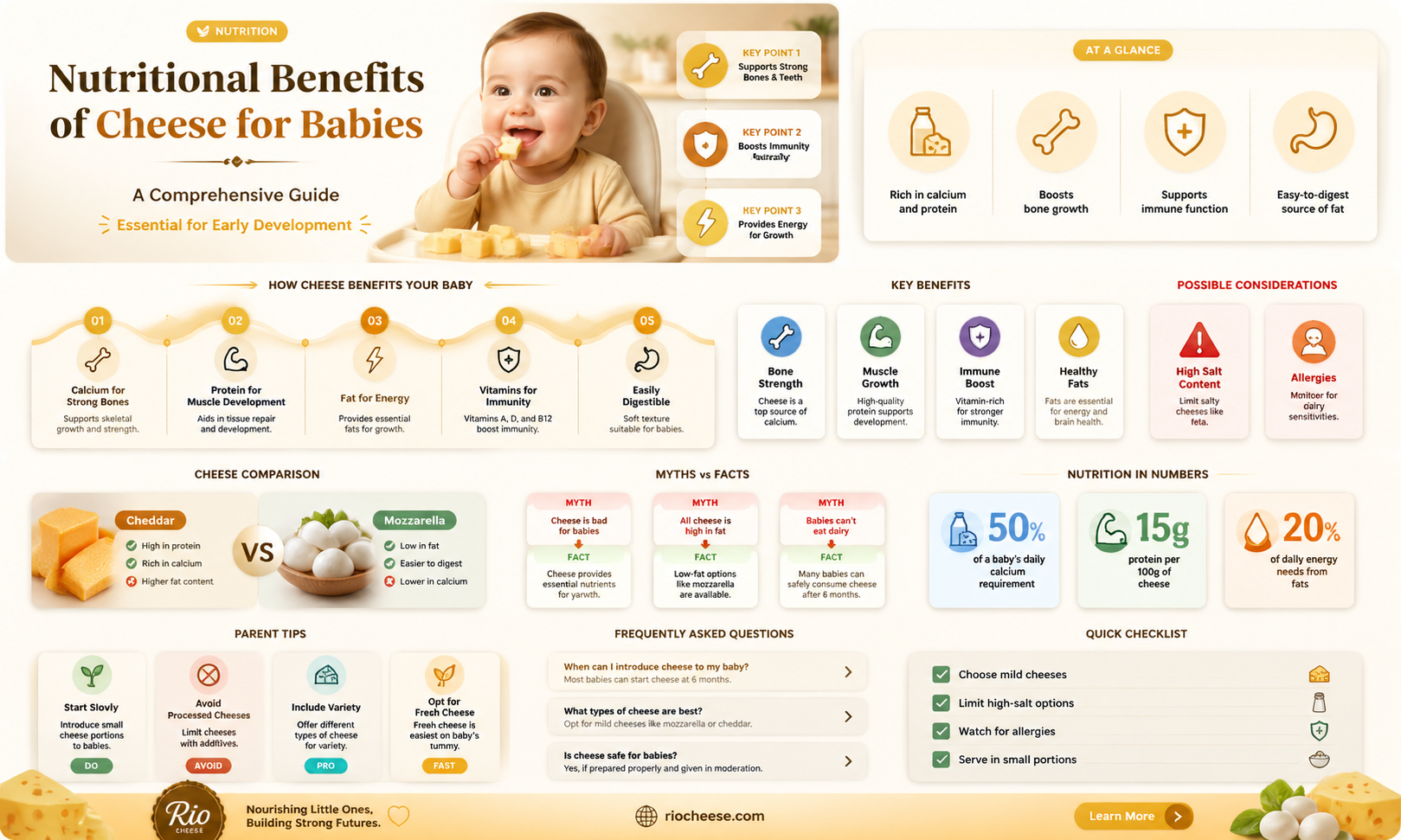
Cheese can be a nutritious addition to a baby's diet, but it's important to introduce it carefully and in moderation. Babies typically start eating solid foods around 6 months of age, and cheese can be introduced at this time as part of a balanced diet. However, it's crucial to choose the right type of cheese and to monitor the baby for any signs of an allergic reaction. Some cheeses, like soft cheeses and those with a high salt content, should be avoided until the baby is older. It's also important to ensure that the cheese is properly stored and handled to prevent any foodborne illnesses. Overall, when introduced appropriately, cheese can be a healthy and delicious food for babies.
Explore related products


What You'll Learn
- Nutritional Benefits: Cheese provides essential nutrients like calcium, protein, and vitamins, supporting baby's growth and development
- Age-Appropriate Introduction: Experts recommend introducing cheese to babies around 6-8 months, starting with small, soft pieces
- Potential Allergies: Some babies may be allergic to cheese, so monitor for reactions like rash, diarrhea, or vomiting
- Choking Hazards: Ensure cheese is cut into small, manageable pieces to reduce the risk of choking
- Types of Cheese: Opt for mild, low-sodium cheeses like mozzarella or cheddar, avoiding strong or blue cheeses

Nutritional Benefits: Cheese provides essential nutrients like calcium, protein, and vitamins, supporting baby's growth and development
Cheese is a nutrient-dense food that can play a vital role in a baby's diet. It is an excellent source of calcium, which is crucial for the development of strong bones and teeth. Adequate calcium intake during infancy sets the foundation for lifelong bone health and can help prevent conditions like osteoporosis later in life.
In addition to calcium, cheese is a good source of high-quality protein. Protein is essential for growth and development, as it provides the building blocks for muscles, organs, and tissues. The protein in cheese is particularly beneficial because it contains all the essential amino acids that babies need but cannot produce on their own.
Cheese also contains a variety of vitamins, including vitamin A, vitamin B12, and riboflavin. Vitamin A is important for vision, immune function, and skin health, while vitamin B12 is necessary for the production of red blood cells and the proper functioning of the nervous system. Riboflavin, or vitamin B2, helps the body convert food into energy and is important for healthy skin and eyes.
When introducing cheese to a baby's diet, it is important to choose varieties that are low in sodium and fat. Cottage cheese, ricotta, and mozzarella are good options for babies because they are mild in flavor and have a soft texture that is easy for young children to chew and swallow. It is also important to introduce cheese gradually and in small amounts to avoid any potential allergic reactions.
In conclusion, cheese can be a healthy and nutritious addition to a baby's diet when introduced appropriately. It provides essential nutrients like calcium, protein, and vitamins that support growth and development. By choosing the right types of cheese and introducing them gradually, parents can help ensure that their babies receive the nutritional benefits of cheese while minimizing any potential risks.
Fuel Your Recovery: The Surprising Benefits of Cheese Post-Workout
You may want to see also
Explore related products


Age-Appropriate Introduction: Experts recommend introducing cheese to babies around 6-8 months, starting with small, soft pieces
Introducing cheese to babies is a milestone in their dietary development, and experts recommend starting this process around 6-8 months of age. At this stage, babies are typically ready to transition from a liquid diet to more solid foods, and cheese can be a nutritious addition to their meals. However, it's crucial to introduce cheese in a safe and age-appropriate manner to avoid any potential risks.
When introducing cheese to babies, it's essential to start with small, soft pieces that are easy to chew and swallow. Hard or stringy cheeses can pose a choking hazard, so it's best to avoid them until the baby is older and has developed better chewing and swallowing skills. Soft cheeses like mozzarella, cheddar, or Swiss are good options for babies, as they are gentle on their digestive system and provide essential nutrients like calcium, protein, and vitamins.
It's also important to monitor the baby's reaction to cheese, as some babies may have a lactose intolerance or an allergy to dairy products. If the baby shows any signs of discomfort, such as diarrhea, vomiting, or skin rashes, it's best to consult with a pediatrician before continuing to introduce cheese into their diet.
As the baby becomes more accustomed to cheese, parents can gradually increase the amount and variety of cheeses offered. However, it's important to remember that cheese should be consumed in moderation, as it can be high in fat and sodium. Offering a balanced diet that includes a variety of fruits, vegetables, grains, and proteins is key to ensuring the baby's overall health and well-being.
In conclusion, introducing cheese to babies around 6-8 months of age can be a beneficial step in their dietary development, as long as it's done safely and in moderation. By starting with small, soft pieces and monitoring the baby's reaction, parents can help their little ones enjoy the taste and nutritional benefits of cheese while minimizing any potential risks.
Exploring the Relationship Between Cheese and Asthma Symptoms
You may want to see also
Explore related products



Potential Allergies: Some babies may be allergic to cheese, so monitor for reactions like rash, diarrhea, or vomiting
Introducing cheese to a baby's diet can be a milestone, but it's crucial to be aware of potential allergies. Some babies may have an adverse reaction to cheese, which can manifest in various ways. Monitoring for reactions such as rash, diarrhea, or vomiting is essential to ensure your baby's safety.
Cheese allergies in babies can range from mild to severe. A rash may appear as a mild, localized irritation or as a more widespread, severe condition. Diarrhea can be a sign of digestive distress, while vomiting may indicate a more immediate and severe allergic response. It's important to note that these symptoms can also be associated with other conditions, so it's always best to consult with a pediatrician if you suspect an allergy.
To minimize the risk of an allergic reaction, it's recommended to introduce cheese gradually and in small amounts. Start with a single type of cheese, such as mild cheddar or mozzarella, and observe your baby's reaction. If there are no adverse effects, you can slowly increase the amount and variety of cheese in their diet. However, if you notice any signs of an allergy, stop feeding cheese immediately and seek medical advice.
It's also important to be aware of cross-contamination risks. If you or someone in your household has a cheese allergy, it's crucial to keep cheese and cheese products separate from other foods to prevent accidental exposure. Additionally, be cautious when eating out or accepting food from others, as they may not be aware of your baby's potential allergy.
In conclusion, while cheese can be a nutritious addition to a baby's diet, it's essential to be vigilant about potential allergies. By monitoring for reactions and introducing cheese gradually, you can help ensure your baby's safety and well-being.
Exploring the Role of Cheese in a Low-Fiber Diet: A Nutritional Guide
You may want to see also
Explore related products


Choking Hazards: Ensure cheese is cut into small, manageable pieces to reduce the risk of choking
Cheese, while a nutritious food, poses a significant choking hazard to babies if not prepared properly. It's essential to cut cheese into small, manageable pieces to reduce the risk of choking. This is especially important for babies who are still developing their chewing and swallowing skills.
When cutting cheese for babies, it's best to use a sharp knife to ensure clean cuts. Aim for pieces that are no larger than a quarter-inch in size. This may seem small, but it's necessary to prevent cheese from becoming lodged in a baby's throat. Additionally, it's helpful to cut the cheese into thin slices or shreds, as these shapes are easier for babies to chew and swallow.
It's also important to supervise babies closely when they're eating cheese. Even with small pieces, there's still a risk of choking if a baby tries to swallow too much at once. Encourage babies to take small bites and chew thoroughly before swallowing.
While it's tempting to give babies cheese that's been cut into fun shapes or sizes, it's crucial to prioritize safety over aesthetics. Avoid giving babies cheese that's been cut into large chunks, balls, or other shapes that could be difficult to chew or swallow.
In conclusion, cheese can be a healthy addition to a baby's diet, but it's essential to take precautions to reduce the risk of choking. By cutting cheese into small, manageable pieces and supervising babies closely while they eat, parents can help ensure that their little ones enjoy cheese safely.
Exploring the Impact of Cheese on A1C Levels: A Nutritional Analysis
You may want to see also
Explore related products

$36.66

$36.66




Types of Cheese: Opt for mild, low-sodium cheeses like mozzarella or cheddar, avoiding strong or blue cheeses
When introducing cheese to a baby's diet, it's crucial to select varieties that are gentle on their developing digestive system and provide nutritional benefits without unnecessary additives. Mild, low-sodium cheeses such as mozzarella and cheddar are excellent choices for several reasons. Firstly, their mild flavor is less likely to overwhelm a baby's palate, making them more palatable and easier to incorporate into meals. Secondly, these cheeses are typically lower in sodium, which is important for maintaining a healthy balance of electrolytes in a baby's body. Excessive sodium intake can lead to dehydration and other health issues, so opting for low-sodium varieties is a prudent choice.
In contrast, strong or blue cheeses should be avoided when feeding babies. These cheeses often contain higher levels of sodium and may have more intense flavors that could be off-putting or difficult for a baby to digest. Additionally, some strong cheeses may contain alcohol or other additives that are not suitable for infants. By choosing mild, low-sodium cheeses, parents can ensure that their babies are getting the nutritional benefits of cheese without the potential drawbacks.
When selecting cheese for babies, it's also important to consider the texture. Soft cheeses like mozzarella can be easily mashed or grated, making them a good option for babies who are still developing their chewing and swallowing skills. Harder cheeses like cheddar can be grated or thinly sliced to make them easier for babies to eat.
In terms of serving size, it's recommended to start with small amounts and gradually increase as the baby becomes accustomed to the taste and texture of cheese. A good rule of thumb is to offer about 1-2 teaspoons of grated or mashed cheese per meal, mixed with other foods that the baby is already familiar with. This approach allows parents to monitor for any signs of intolerance or allergy while gradually introducing cheese as a regular part of the baby's diet.
Overall, by opting for mild, low-sodium cheeses and introducing them in a controlled and gradual manner, parents can provide their babies with the nutritional benefits of cheese while minimizing potential risks. As always, it's important to consult with a pediatrician or healthcare provider for personalized advice on introducing new foods to a baby's diet.
Frequently asked questions
Cheese can be a healthy part of a baby's diet, but it's important to introduce it gradually and in moderation. Start with small amounts of mild cheese when your baby is around 6 months old.
Cheese is a good source of calcium, protein, and vitamins, which are essential for a baby's growth and development. It can help build strong bones and teeth, support muscle growth, and provide energy.
Mild cheeses like mozzarella, cheddar, and Swiss are generally safe for babies. Avoid strong cheeses like blue cheese or feta, as they can be too intense for a baby's digestive system.
Start with small amounts, about 1-2 ounces per day, and gradually increase as your baby gets older and more accustomed to it. Remember, cheese is high in fat and calories, so moderation is key.
Yes, there are a few risks to consider. Some babies may be allergic to dairy, so watch for signs of an allergic reaction like rash, vomiting, or diarrhea. Also, cheese can be a choking hazard if not cut into small, manageable pieces.