Randy Chandler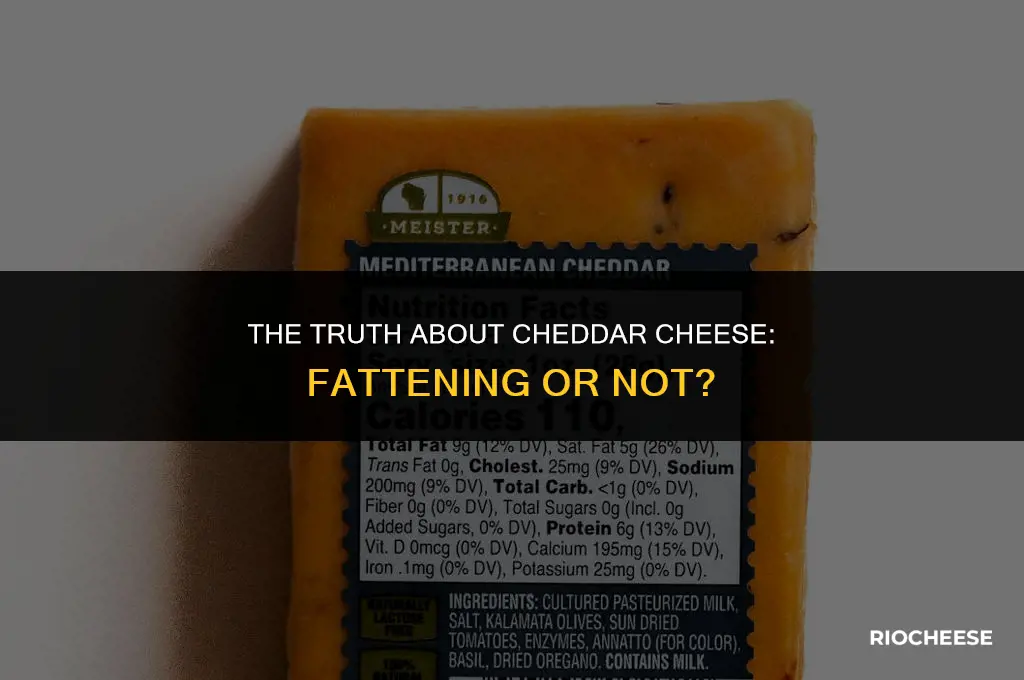
Cheddar cheese, a popular dairy product known for its rich flavor and versatility in cooking, has often been scrutinized for its fat content. Many individuals concerned about their dietary intake wonder whether incorporating cheddar cheese into their meals could contribute to weight gain. To address this query, it's essential to delve into the nutritional composition of cheddar cheese and understand how its consumption fits within a balanced diet. By examining the fat content, calorie count, and potential health benefits of cheddar cheese, one can make an informed decision about its role in a healthy eating plan.
Explore related products



What You'll Learn

Nutritional content of cheddar cheese
Cheddar cheese is a popular dairy product known for its rich flavor and versatility in cooking. However, its nutritional content is often a topic of debate, particularly in relation to its fat content. A 1-ounce serving of cheddar cheese contains approximately 9 grams of fat, with about 6 grams being saturated fat. This high saturated fat content is what primarily contributes to the perception of cheddar cheese as a fattening food.
In addition to fat, cheddar cheese is also a good source of protein, calcium, and vitamins A and B12. A 1-ounce serving provides about 7 grams of protein, which can help with muscle repair and growth. The calcium content in cheddar cheese is beneficial for bone health, and vitamins A and B12 play important roles in maintaining healthy vision, skin, and nervous system function.
It's important to note that the nutritional value of cheddar cheese can vary depending on the type and aging process. For example, sharper cheddar cheeses tend to have lower fat content compared to milder varieties. Additionally, the way cheddar cheese is consumed can impact its overall nutritional profile. When used in moderation as part of a balanced diet, cheddar cheese can provide valuable nutrients without significantly contributing to weight gain.
To put the fat content of cheddar cheese into perspective, it's helpful to compare it to other common foods. For instance, a 1-ounce serving of almonds contains about 14 grams of fat, while a medium avocado has roughly 10 grams of fat. Like these foods, cheddar cheese can be part of a healthy diet when consumed in appropriate portions.
In conclusion, while cheddar cheese does contain a significant amount of fat, it also offers important nutrients that can benefit overall health. By understanding its nutritional content and consuming it in moderation, cheddar cheese can be enjoyed as part of a balanced and varied diet without necessarily leading to weight gain.
Unlocking the Nutritional Secrets of Cheddar Cheese: A Comprehensive Guide
You may want to see also
Explore related products



Caloric density and portion control
Cheese, particularly cheddar, is often scrutinized for its fat content. However, understanding caloric density and practicing portion control can help clarify its role in a balanced diet. Caloric density refers to the number of calories per gram of food. Foods high in fat, like cheese, tend to be more calorie-dense. For instance, cheddar cheese contains approximately 4 calories per gram, which is higher than many fruits and vegetables but lower than some nuts and oils.
Portion control is crucial when consuming calorie-dense foods. A standard serving of cheese is about 1 ounce (28 grams), which provides around 115 calories. While this may seem high, it's essential to consider the nutritional benefits cheese offers, such as protein, calcium, and vitamins. By controlling portion sizes, one can enjoy cheese without significantly increasing overall caloric intake.
To effectively manage portion sizes, consider using smaller plates or bowls, measuring cheese with a food scale, or using visual cues like the size of a domino or a pair of dice to estimate 1-ounce servings. Additionally, incorporating cheese into meals with lower-calorie options, such as salads or vegetables, can help balance the caloric intake.
It's also important to note that not all cheeses are created equal. Some varieties, like reduced-fat or skim-milk cheeses, offer lower calorie and fat content while still providing similar nutritional benefits. Choosing these options can be a practical way to enjoy cheese while maintaining a balanced diet.
In conclusion, while cheddar cheese is calorie-dense, it can still be part of a healthy diet when consumed in moderation. By practicing portion control and being mindful of overall caloric intake, one can enjoy the taste and nutritional benefits of cheese without it contributing negatively to weight management goals.
Navigating Lactose Intolerance: Can You Still Enjoy Cheddar Cheese?
You may want to see also
Explore related products



Impact on weight gain and loss
Cheddar cheese, a popular dairy product, has often been scrutinized for its potential impact on weight gain and loss. While it is true that cheddar cheese is relatively high in calories and fat, its role in weight management is more complex than simply being "fattening." Research suggests that the consumption of cheddar cheese in moderation can actually aid in weight loss efforts due to its high protein and fiber content, which can promote feelings of fullness and reduce overall calorie intake.
One study published in the Journal of Nutrition found that individuals who consumed cheddar cheese as part of a calorie-controlled diet experienced greater weight loss and improved body composition compared to those who did not include cheese in their diet. This is likely due to the fact that protein and fiber can help to increase metabolism and support muscle growth, which in turn can lead to a higher calorie burn.
However, it is important to note that moderation is key when it comes to cheddar cheese consumption. Overconsumption of any high-calorie food can lead to weight gain, and cheddar cheese is no exception. The American Heart Association recommends limiting daily saturated fat intake to no more than 5-6% of total calories, which translates to about 13 grams for a 2,000 calorie diet. Since cheddar cheese is high in saturated fat, it is important to enjoy it in moderation as part of a balanced diet.
In addition to its potential benefits for weight management, cheddar cheese also offers a number of other health benefits. It is a good source of calcium, which is essential for strong bones and teeth, and it also contains vitamins A, B12, and K. Furthermore, cheddar cheese has been shown to have antioxidant properties, which can help to protect against cell damage and reduce inflammation in the body.
In conclusion, while cheddar cheese is not necessarily "fattening," it is important to consume it in moderation as part of a balanced diet. Its high protein and fiber content can aid in weight loss efforts, and it offers a number of other health benefits that make it a valuable addition to a healthy diet.
Cheddar Cheese Conundrum: Safe to Leave Out or Not?
You may want to see also
Explore related products


Comparison to other cheeses and foods
Cheddar cheese, with its rich flavor and versatility, is often compared to other types of cheese and foods when considering its nutritional value. One common comparison is with mozzarella cheese, which is lower in fat and calories than cheddar. Mozzarella contains about 22 calories and 1.5 grams of fat per ounce, whereas cheddar has approximately 115 calories and 9 grams of fat per ounce. This significant difference in fat content makes mozzarella a popular choice for those looking to reduce their calorie intake while still enjoying cheese.
Another comparison is with blue cheese, which, despite its strong flavor, is surprisingly lower in fat than cheddar. Blue cheese typically has around 70 calories and 6 grams of fat per ounce. However, its pungent taste and moldy appearance may not appeal to everyone, limiting its use in certain dishes.
When compared to other foods outside the cheese category, cheddar's fat content is relatively high. For instance, a serving of grilled chicken breast (about 3 ounces) contains roughly 140 calories and 3 grams of fat, making it a leaner protein option. Similarly, a medium-sized apple has about 95 calories and 0.3 grams of fat, providing a sweet and crunchy snack alternative with significantly less fat than cheddar.
In terms of dietary impact, the high fat content of cheddar cheese can contribute to weight gain if consumed in excess. However, it's essential to consider the overall diet and balance of nutrients. Cheddar cheese is also a good source of protein, calcium, and vitamins A and B12, which are important for maintaining strong bones, muscles, and a healthy immune system.
To mitigate the fattening effects of cheddar cheese, one can practice portion control and incorporate it into a balanced diet. For example, using cheddar as a topping for salads or vegetables can add flavor without significantly increasing the calorie count. Additionally, choosing reduced-fat or skim-milk cheddar options can help reduce the overall fat intake while still enjoying the taste of cheddar cheese.
The Truth About Cheddar Cheese and Canine Health: Is It Safe?
You may want to see also
Explore related products


Health benefits and balanced diet inclusion
Cheddar cheese, a staple in many diets, is often scrutinized for its fat content. However, it's essential to recognize that not all fats are created equal. Cheddar cheese contains a significant amount of saturated fat, which, when consumed in moderation, can be part of a balanced diet. Saturated fats are crucial for various bodily functions, including hormone production and cell repair. Moreover, cheddar cheese is an excellent source of protein, calcium, and vitamins A and B12, which are vital for maintaining strong bones, supporting the immune system, and promoting healthy skin and vision.
Incorporating cheddar cheese into a balanced diet requires mindful portion control. The American Heart Association recommends limiting saturated fat intake to no more than 5-6% of total daily calories. For an average adult consuming 2,000 calories per day, this translates to about 11-13 grams of saturated fat. A single ounce of cheddar cheese contains approximately 6-7 grams of saturated fat, so it's crucial to balance cheese consumption with other sources of saturated fat in the diet.
One effective strategy for including cheddar cheese in a balanced diet is to pair it with nutrient-dense foods that are low in saturated fat. For example, combining cheddar cheese with whole-grain crackers, fresh fruits, or raw vegetables can create a satisfying and nutritious snack. Additionally, using cheddar cheese as a flavor enhancer in dishes rather than the main ingredient can help control portion sizes while still enjoying its rich taste.
It's also important to consider the type of cheddar cheese being consumed. Sharp cheddar cheese tends to have a stronger flavor, which can make it more satisfying in smaller quantities. On the other hand, milder cheddar cheeses may require larger portions to achieve the same level of satisfaction, potentially leading to higher calorie and fat intake.
In conclusion, while cheddar cheese does contain saturated fat, it can still be part of a healthy and balanced diet when consumed in moderation and paired with nutrient-dense foods. By being mindful of portion sizes and choosing sharper varieties, individuals can enjoy the health benefits of cheddar cheese without compromising their dietary goals.
Unraveling the Mystery: Is Cheddar Cheese Real or Fake?
You may want to see also
Frequently asked questions
Cheddar cheese can be high in calories and fat, particularly saturated fat, which may contribute to weight gain if consumed in excess. However, it also provides protein, calcium, and other nutrients. Moderation is key when including cheddar cheese in a balanced diet.
The amount of cheddar cheese you can eat without gaining weight depends on your overall diet, activity level, and individual calorie needs. Generally, a serving size of 1-2 ounces (28-56 grams) per day is recommended as part of a balanced diet.
Healthier alternatives to cheddar cheese include part-skim mozzarella, reduced-fat cheddar, feta, goat cheese, and blue cheese. These options are lower in calories and saturated fat while still providing flavor and nutritional benefits.
Yes, you can eat cheddar cheese if you're trying to lose weight, but it's important to consume it in moderation and as part of a calorie-controlled diet. Portion control and balancing your intake with other nutritious foods are crucial for successful weight loss.
Cheddar cheese is a good source of protein, calcium, phosphorus, and vitamins A, B12, and K. It also contains conjugated linoleic acid (CLA), which may have potential health benefits. However, it's important to balance these benefits with the high calorie and saturated fat content.