Randy Chandler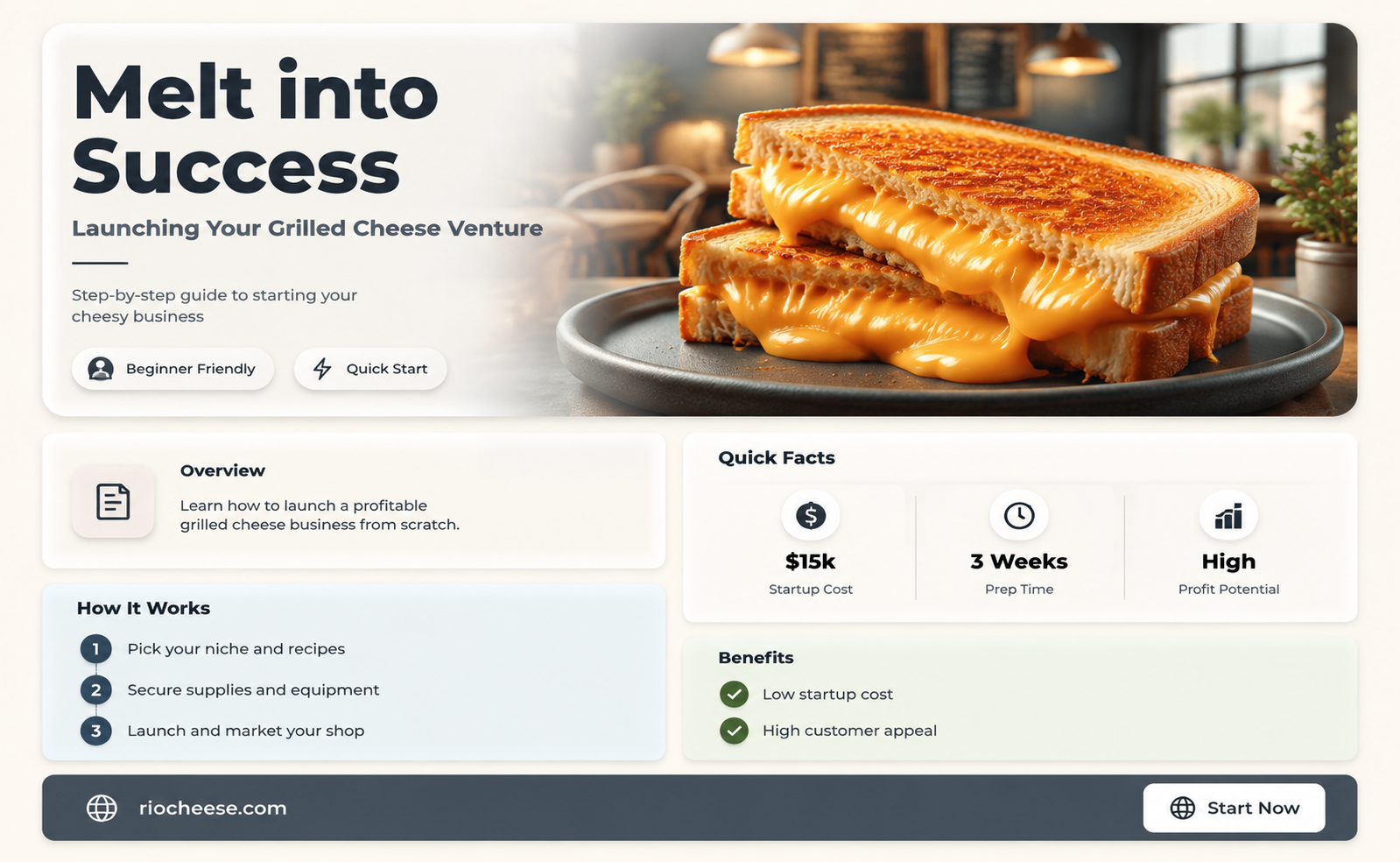
Starting a grilled cheese business can be a delicious venture for entrepreneurs passionate about comfort food. With the right strategy, you can turn this classic sandwich into a profitable enterprise. From selecting the perfect blend of cheeses to crafting a unique menu, there are several key steps to consider. First, you'll need to develop a business plan that outlines your goals, target market, and financial projections. Next, finding the ideal location for your grilled cheese shop is crucial, as foot traffic and accessibility can significantly impact your success. Additionally, investing in high-quality equipment and ingredients will ensure that your sandwiches stand out from the competition. Marketing your business effectively, both online and offline, will also be essential to attract customers and build a loyal following. By following these steps and staying dedicated to your vision, you can create a thriving grilled cheese business that brings joy and satisfaction to your community.
Explore related products


What You'll Learn
- Market Research: Identify target audience, analyze competitors, and determine the viability of your grilled cheese business idea
- Menu Development: Create a unique and appealing menu featuring a variety of grilled cheese sandwiches and complementary items
- Location Selection: Choose a strategic location for your business, considering foot traffic, accessibility, and local regulations
- Equipment and Supplies: Invest in essential equipment such as grills, utensils, and ingredients to ensure quality and efficiency
- Marketing and Promotion: Develop a comprehensive marketing plan to attract customers, including social media, advertising, and community engagement

Market Research: Identify target audience, analyze competitors, and determine the viability of your grilled cheese business idea
To conduct effective market research for your grilled cheese business, begin by identifying your target audience. This involves segmenting the market based on demographics, psychographics, and behavioral patterns. For instance, you might target young professionals who frequent food trucks or families with children who prefer casual dining experiences. Understanding your audience's preferences, spending habits, and lifestyle will help tailor your offerings and marketing strategies.
Next, analyze your competitors to gauge the market's saturation level and identify gaps you can exploit. Research local eateries, food trucks, and even online businesses that sell grilled cheese or similar comfort foods. Evaluate their pricing strategies, menu offerings, customer reviews, and marketing tactics. This analysis will provide insights into what works and what doesn't in your market, allowing you to differentiate your business effectively.
Determining the viability of your grilled cheese business idea involves assessing the market demand and potential profitability. Conduct surveys, focus groups, or soft openings to gather feedback from potential customers. Analyze industry trends, consumer preferences, and economic indicators to forecast demand. Additionally, create a financial model to estimate startup costs, revenue projections, and break-even points. This comprehensive approach will help you make an informed decision about the feasibility of your business idea.
Remember, market research is an ongoing process that should inform and adapt your business strategy. Continuously monitor market trends, customer feedback, and competitor actions to stay ahead in the competitive food industry. By doing so, you'll be better equipped to pivot your strategy when necessary and capitalize on emerging opportunities.
Mastering the Art of Smoking Cheese on a Charcoal Grill
You may want to see also
Explore related products


Menu Development: Create a unique and appealing menu featuring a variety of grilled cheese sandwiches and complementary items
To create a unique and appealing menu for a grilled cheese business, it's essential to focus on variety and creativity. Start by offering a range of grilled cheese sandwiches that cater to different tastes and dietary preferences. For example, you could include classic options like cheddar and American cheese, as well as more gourmet choices such as brie and fig jam or goat cheese and sun-dried tomatoes. Consider adding vegetarian and vegan options to attract a wider customer base.
In addition to grilled cheese sandwiches, it's important to offer complementary items that enhance the overall dining experience. These could include a selection of soups, such as tomato basil or broccoli cheddar, which pair well with grilled cheese. Salads, like a mixed green with applewood bacon and a tangy vinaigrette, can provide a refreshing contrast to the richness of the sandwiches. Don't forget to include a variety of sides, such as crispy onion rings, sweet potato fries, or a side of pickles.
When developing your menu, it's crucial to consider the presentation and pricing of each item. Make sure that your menu is visually appealing, with clear descriptions and attractive images of the dishes. Pricing should be competitive yet reflective of the quality and uniqueness of your offerings. Consider offering combo deals or specials to encourage customers to try multiple items.
Another key aspect of menu development is to regularly update and rotate your offerings. This keeps the menu fresh and exciting, encouraging repeat customers to try new items. You could also consider hosting special events or themed nights, where you offer limited-time menu items that align with the event's theme.
Finally, gather feedback from your customers and use it to refine your menu. This could be done through surveys, comment cards, or social media. By listening to your customers' preferences and suggestions, you can continuously improve your menu and ensure that it remains unique and appealing.
Elevate Your Grilled Cheese: Creative Ways to Add a Kick
You may want to see also
Explore related products


Location Selection: Choose a strategic location for your business, considering foot traffic, accessibility, and local regulations
Choosing the right location for your grilled cheese business is crucial for its success. A strategic location can significantly impact your customer base, revenue, and overall growth potential. When selecting a location, consider the following factors:
Foot traffic is essential for any food business, especially one that relies on quick, convenient meals like grilled cheese sandwiches. Look for areas with high pedestrian traffic, such as busy streets, shopping centers, or near public transportation hubs. These locations will provide a steady stream of potential customers who are looking for a quick bite to eat.
Accessibility is another key factor to consider. Ensure that your location is easily accessible to customers, with ample parking or convenient public transportation options. This will make it more likely that customers will choose your business over competitors that are harder to reach.
Local regulations can also have a significant impact on your business location. Research the zoning laws and health regulations in your area to ensure that your chosen location is compliant. This may include restrictions on food preparation, waste disposal, and noise levels. Additionally, consider the local competition and market saturation. If there are already several grilled cheese businesses in the area, it may be more challenging to establish a customer base.
When evaluating potential locations, consider conducting a feasibility study to assess the viability of each option. This may include surveying the local community to gauge interest in your business, analyzing the financial performance of similar businesses in the area, and assessing the potential for growth and expansion.
Ultimately, the right location for your grilled cheese business will depend on a variety of factors, including your target market, business model, and local regulations. By carefully considering these factors and conducting thorough research, you can choose a location that will set your business up for success.
Savor the Simplicity: The Art of Perfect Grilled Cheese
You may want to see also
Explore related products


Equipment and Supplies: Invest in essential equipment such as grills, utensils, and ingredients to ensure quality and efficiency
Investing in the right equipment and supplies is crucial when starting a grilled cheese business. The quality of your tools directly impacts the quality of your product, and having the right ingredients on hand ensures consistency and customer satisfaction. Here’s a breakdown of the essential items you’ll need to get started:
First and foremost, you’ll need a reliable grill or griddle. This is the heart of your operation, as it’s where the magic happens. Look for a grill that can maintain consistent heat and has enough surface area to handle multiple sandwiches at once. You may also want to consider a grill with a press, which can help achieve that perfect golden-brown crust.
Next, you’ll need a variety of utensils. A good set of spatulas is essential for flipping and removing sandwiches from the grill. You’ll also need tongs for handling hot ingredients and a sharp knife for cutting bread and other ingredients. Don’t forget about serving utensils, such as a cake server or a spatula with a serrated edge, to make it easy to transfer sandwiches to plates.
When it comes to ingredients, the quality of your bread and cheese is paramount. Choose a bread that grills well and can hold up to the heat without falling apart. As for cheese, you’ll want a variety that melts well and has a great flavor. Consider offering different types of cheese to cater to different tastes. You may also want to stock up on other ingredients, such as meats, vegetables, and spreads, to offer a variety of sandwich options.
Finally, don’t forget about the little things. You’ll need plates, napkins, and cutlery for serving, as well as cleaning supplies to keep your workspace tidy. It’s also a good idea to have a first aid kit on hand in case of any accidents.
By investing in the right equipment and supplies, you can ensure that your grilled cheese business runs smoothly and efficiently. Remember, the quality of your tools and ingredients directly impacts the quality of your product, so don’t skimp on these essentials. With the right gear, you’ll be well on your way to creating delicious grilled cheese sandwiches that your customers will love.
Mastering the Art of Smoking Cheese on a Louisiana Pellet Grill
You may want to see also
Explore related products


Marketing and Promotion: Develop a comprehensive marketing plan to attract customers, including social media, advertising, and community engagement
To effectively market and promote a grilled cheese business, it's essential to create a buzz around your brand and offerings. One unique angle to consider is leveraging the power of social media influencers. Identify local food bloggers, Instagrammers, and TikTok creators who have a strong following and align with your target audience. Reach out to them for collaborations, offering free meals in exchange for honest reviews and shoutouts. This can help you tap into their existing audience and generate organic interest in your business.
Another effective strategy is to focus on community engagement. Host events like grilled cheese-making workshops, charity fundraisers, or even a grilled cheese festival. Partner with local schools, libraries, or community centers to reach a wider audience. These events not only help you build relationships with potential customers but also create opportunities for word-of-mouth marketing and local media coverage.
In addition to these tactics, consider investing in targeted advertising. Use social media platforms' advertising tools to reach specific demographics, interests, and locations. Create eye-catching ads with high-quality images of your grilled cheese offerings and compelling calls-to-action. You can also explore local print or radio advertising, especially if your target audience is more traditional.
To stand out from the competition, develop a unique brand identity that reflects your business's personality and values. Create a memorable logo, design eye-catching menus and packaging, and establish a consistent tone of voice across all your marketing materials. This will help you build brand recognition and loyalty over time.
Finally, don't underestimate the power of customer reviews and testimonials. Encourage satisfied customers to leave reviews on platforms like Yelp, Google, and Facebook. Use these reviews in your marketing materials and on your website to build social proof and credibility. By implementing these strategies, you can create a comprehensive marketing plan that attracts customers and sets your grilled cheese business apart from the competition.
Elevate Your Grilled Cheese: Creative Tips and Tricks
You may want to see also
Frequently asked questions
The initial steps include conducting market research, creating a business plan, securing funding, choosing a location, and obtaining necessary permits and licenses.
Differentiate your business by offering unique grilled cheese variations, using high-quality ingredients, providing excellent customer service, and creating a memorable brand identity.
Essential equipment includes commercial grills or griddles, cheese melters, refrigerators, freezers, and food preparation stations.
Determine pricing by considering the cost of ingredients, labor, overhead expenses, and competitor pricing. Conduct market research to ensure your prices are competitive yet profitable.
Effective marketing strategies include social media marketing, local advertising, participating in food festivals and events, offering promotions and discounts, and encouraging word-of-mouth referrals.