Patrick Oconnell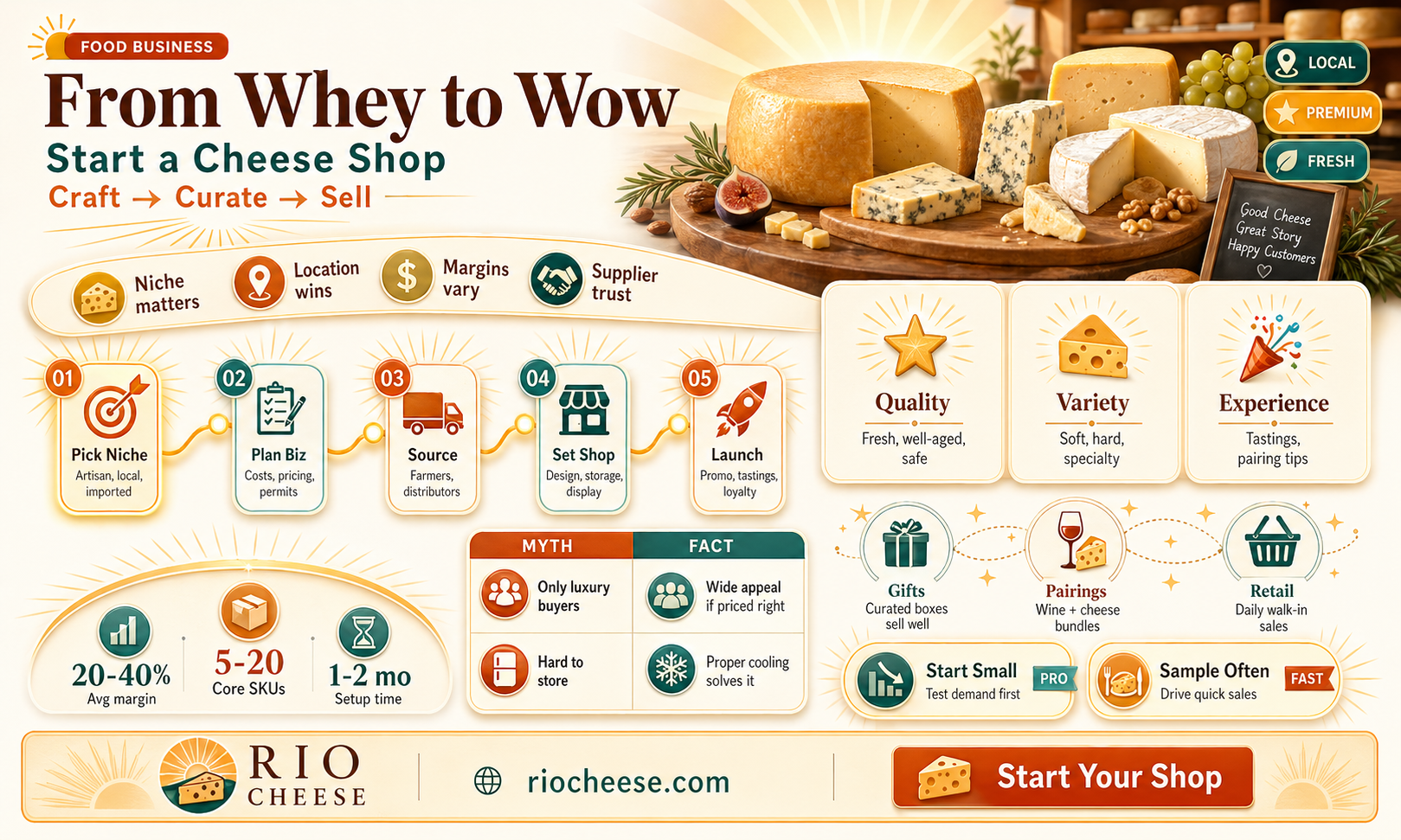
Opening a cheese shop can be a delightful venture for those passionate about artisanal cheeses and gourmet foods. It requires a blend of business acumen, knowledge of cheese varieties, and a commitment to providing high-quality products and customer service. This guide will walk you through the essential steps, from conceptualizing your shop and selecting a location, to curating your cheese inventory and marketing your business effectively. By following these guidelines, you can turn your dream of owning a cheese shop into a successful and rewarding reality.
Explore related products


What You'll Learn
- Market Research: Identify target audience, analyze competitors, and determine the viability of your cheese shop idea
- Business Plan: Create a comprehensive plan outlining your shop's mission, financial projections, and marketing strategies
- Location Selection: Choose a prime location with high foot traffic and accessibility, considering local zoning laws
- Inventory Management: Source a diverse selection of cheeses, manage stock levels, and ensure proper storage conditions
- Customer Service: Train staff to provide expert advice, handle customer inquiries, and create a welcoming shopping environment

Market Research: Identify target audience, analyze competitors, and determine the viability of your cheese shop idea
To conduct effective market research for your cheese shop, begin by identifying your target audience. This involves understanding the demographics, preferences, and purchasing behaviors of potential customers. For instance, are you targeting food connoisseurs, casual consumers, or a specific age group? Analyzing these factors will help you tailor your product offerings and marketing strategies to meet the needs of your ideal customers.
Next, analyze your competitors. Research other cheese shops in your area or online to understand their strengths, weaknesses, and market positioning. Look at their product range, pricing strategies, and customer reviews. This analysis will help you identify gaps in the market and opportunities to differentiate your cheese shop. For example, you might find that there's a lack of artisanal cheeses in your local market, which could be a unique selling point for your shop.
Determining the viability of your cheese shop idea involves assessing the market demand and potential profitability. Conduct surveys or focus groups to gather feedback on your concept and products. Use this data to refine your business model and make informed decisions about inventory, pricing, and marketing. Additionally, consider the regulatory requirements and permits needed to operate a cheese shop in your location.
In summary, thorough market research is crucial for the success of your cheese shop. By identifying your target audience, analyzing competitors, and determining the viability of your idea, you can develop a strong foundation for your business. This research will guide your strategic decisions and help you create a cheese shop that meets the needs of your customers while standing out in the market.
Exploring the World of Cheese: What Makes a Big Unit?
You may want to see also
Explore related products


![The Small-Scale Cheese Business( The Complete Guide to Running a Successful Farmstead Creamery)[SMALL-SCALE CHEESE BUSINESS][Paperback]](https://m.media-amazon.com/images/I/41tfpFluYxL._AC_UY218_.jpg)


Business Plan: Create a comprehensive plan outlining your shop's mission, financial projections, and marketing strategies
A well-crafted business plan is the cornerstone of any successful cheese shop. It serves as a roadmap, guiding you through the initial setup, growth, and sustainability phases. To create a comprehensive plan, start by defining your shop's mission. This should encapsulate your passion for cheese, your target market, and your unique selling proposition. For instance, your mission could be to provide artisanal, locally-sourced cheeses to food enthusiasts in your community.
Next, delve into financial projections. This section should include a detailed breakdown of startup costs, such as rent, equipment, inventory, and licensing fees. Estimate your revenue streams, considering factors like pricing strategies, sales volume, and potential partnerships with local restaurants or catering services. Don't forget to account for ongoing expenses, such as utilities, employee wages, and marketing costs. A realistic financial forecast will help you secure funding and stay on track financially.
Marketing strategies are crucial for attracting and retaining customers. Develop a multi-faceted approach that includes both online and offline tactics. Utilize social media platforms to showcase your products, share recipes, and engage with your audience. Consider hosting cheese-tasting events, collaborating with local food bloggers, or offering loyalty programs to build a strong customer base. Your marketing efforts should be tailored to your target demographic and should highlight what sets your shop apart from competitors.
Remember to regularly review and update your business plan as your shop evolves. This will help you stay focused on your goals, adapt to changing market conditions, and make informed decisions about growth and expansion. By investing time and effort into creating a thorough business plan, you'll set your cheese shop up for success and ensure that your passion for cheese translates into a thriving business.
Explore related products


Location Selection: Choose a prime location with high foot traffic and accessibility, considering local zoning laws
Choosing the right location for your cheese shop is crucial to its success. A prime location with high foot traffic and accessibility can significantly impact your customer base and sales. However, it's essential to consider local zoning laws to ensure your business complies with all regulations.
Start by researching areas with high foot traffic, such as downtown districts, shopping centers, or tourist attractions. These locations are more likely to attract potential customers who are looking for specialty items like artisanal cheeses. Additionally, consider the accessibility of the location, ensuring that it is easy for customers to reach by car, public transportation, or on foot.
Once you have identified potential locations, it's important to research local zoning laws to ensure that your business is allowed to operate in that area. Zoning laws can vary significantly from one location to another, so it's essential to understand the specific regulations that apply to your business. This may include restrictions on signage, hours of operation, or the types of products you can sell.
In addition to foot traffic and zoning laws, consider the competition in the area. Are there other cheese shops or specialty food stores nearby? If so, how can you differentiate your business and attract customers? This may involve offering unique products, providing exceptional customer service, or creating a distinctive atmosphere in your shop.
Finally, consider the long-term potential of the location. Is the area growing or declining? Are there plans for future development that could impact your business? By choosing a location with strong growth potential, you can position your cheese shop for long-term success.
Explore related products


Inventory Management: Source a diverse selection of cheeses, manage stock levels, and ensure proper storage conditions
Sourcing a diverse selection of cheeses is crucial for a cheese shop's success. Start by researching local and international cheese producers to find unique and high-quality options. Attend cheese festivals and trade shows to network with suppliers and taste new varieties. Consider offering a mix of popular cheeses like cheddar and mozzarella, as well as more exotic options like blue cheese or goat cheese.
Managing stock levels is essential to avoid waste and ensure freshness. Implement a first-in, first-out (FIFO) inventory system to track the age of your cheese stock. Regularly review sales data to identify slow-moving items and adjust your ordering accordingly. Use inventory management software to streamline the process and receive alerts when stock levels are low.
Proper storage conditions are critical for maintaining the quality and safety of your cheese inventory. Store cheeses at the appropriate temperature and humidity levels, which vary depending on the type of cheese. For example, soft cheeses like brie should be stored at around 50°F (10°C) and 80% humidity, while hard cheeses like parmesan can be stored at cooler temperatures and lower humidity. Regularly inspect your storage area for any signs of mold or contamination, and ensure that your staff is trained in proper food safety practices.
To optimize your inventory management, consider implementing a just-in-time (JIT) ordering system. This approach involves ordering cheese only when you need it, rather than keeping large quantities in stock. JIT can help reduce waste and improve cash flow, but it requires careful planning and coordination with your suppliers.
Finally, don't forget to consider the packaging and labeling of your cheese inventory. Use high-quality, airtight packaging to preserve freshness, and ensure that all labels are accurate and comply with local food safety regulations. Consider offering customizable packaging options for customers who want to purchase cheese as gifts or for special occasions.
Explore related products


$28 $34.95


Customer Service: Train staff to provide expert advice, handle customer inquiries, and create a welcoming shopping environment
Effective customer service is crucial for the success of a cheese shop. To ensure that your staff can provide expert advice, handle customer inquiries, and create a welcoming shopping environment, consider implementing the following training strategies:
First, invest in comprehensive product knowledge training for all staff members. This should include information about the different types of cheese, their origins, flavor profiles, and ideal pairings. By equipping your staff with this knowledge, they will be able to confidently answer customer questions and make informed recommendations.
Second, emphasize the importance of active listening and empathy in customer interactions. Train your staff to ask open-ended questions, paraphrase customer concerns, and acknowledge their feelings. This will help to build trust and rapport with customers, making them feel valued and understood.
Third, create a welcoming shopping environment by training your staff to be attentive and responsive to customer needs. This could include greeting customers promptly, offering assistance without being pushy, and ensuring that the store is clean and well-organized. Additionally, consider offering complimentary tastings or hosting educational events to engage customers and foster a sense of community.
Fourth, establish clear guidelines for handling customer complaints and feedback. Train your staff to remain calm and professional in the face of criticism, and to escalate issues to management when necessary. By addressing customer concerns promptly and effectively, you can turn negative experiences into positive ones and maintain a strong reputation for your cheese shop.
Finally, regularly evaluate and refine your customer service training program to ensure that it is meeting the needs of your staff and customers. Solicit feedback from both groups, and use this information to make adjustments to your training materials and methods. By continuously improving your customer service, you can stay ahead of the competition and build a loyal customer base for your cheese shop.
Frequently asked questions
The initial steps include conducting market research to understand consumer preferences and competitors, creating a business plan that outlines your vision, goals, and financial projections, and securing funding to cover startup costs such as inventory, equipment, and rent.
The specific licenses and permits required vary by location, but generally, you will need a business license, a food handler's permit, and possibly a specialty food permit. It's also important to ensure that your shop complies with local health and safety regulations.
Selecting the right location involves considering factors such as foot traffic, accessibility, and the demographics of the area. You want a location that is easily accessible to potential customers and has a high visibility. Additionally, it's beneficial to be situated in an area with complementary businesses, such as wine shops or gourmet food stores, to attract a similar customer base.