Frederic Melton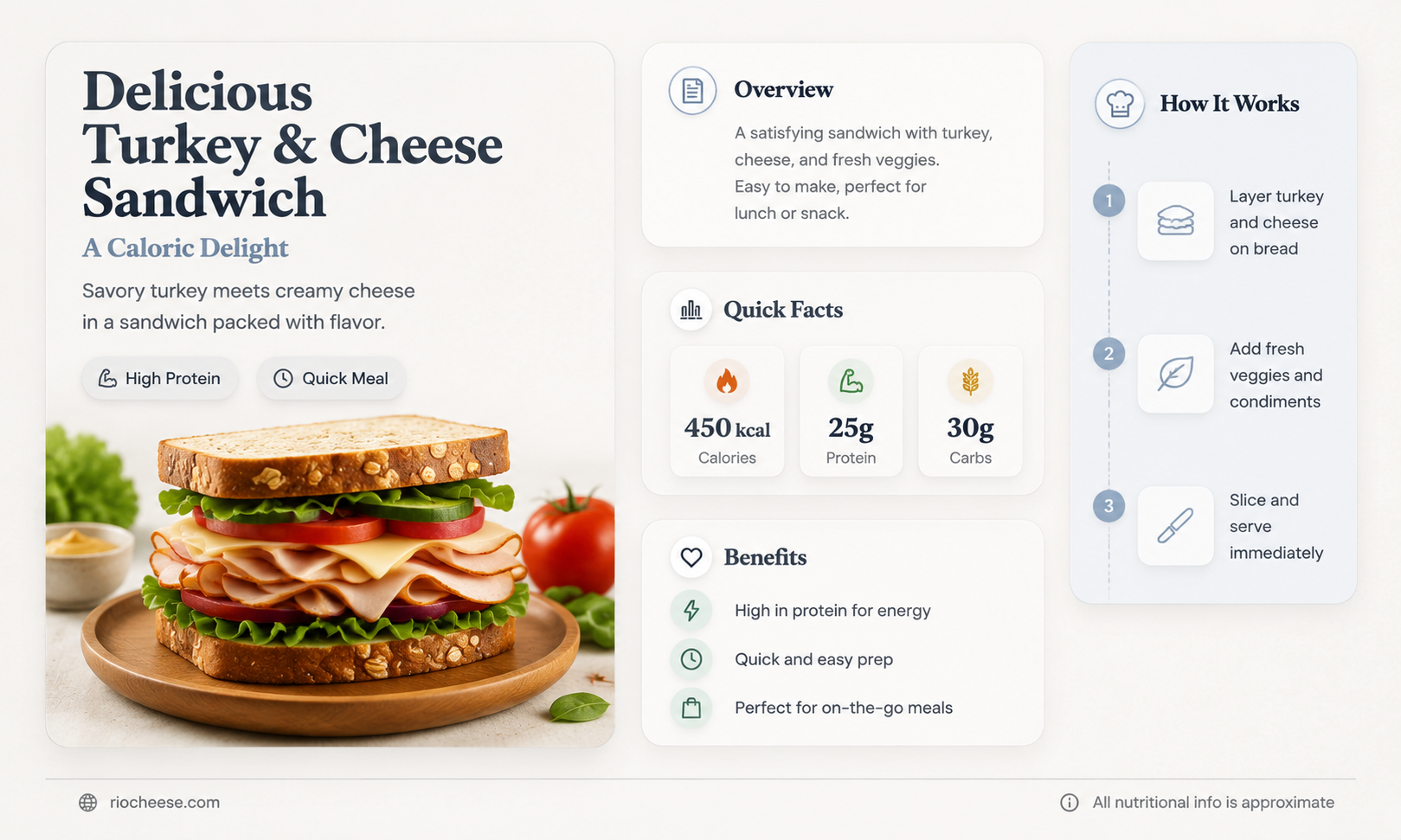
A turkey and cheese sandwich is a popular lunchtime choice, known for its satisfying combination of protein, dairy, and carbohydrates. When considering the caloric content of this sandwich, several factors come into play, including the type and amount of turkey, cheese, bread, and any additional condiments or toppings. On average, a turkey and cheese sandwich made with whole wheat bread, 3 ounces of turkey breast, and 1 ounce of cheddar cheese can range from 350 to 450 calories. However, variations in portion sizes and ingredient types can significantly impact the overall calorie count. For instance, using white bread instead of whole wheat can reduce the fiber content and slightly lower the calorie count, while adding mayonnaise or other high-calorie condiments can increase the total caloric intake. Understanding the nutritional breakdown of a turkey and cheese sandwich can help individuals make informed dietary choices and maintain a balanced diet.
Explore related products


What You'll Learn
- Calorie Breakdown: Understand the macronutrient distribution in a turkey and cheese sandwich
- Ingredient Variations: Explore how different ingredients and portion sizes affect the calorie count
- Healthier Alternatives: Discover ways to make a turkey and cheese sandwich more nutritious and lower in calories
- Nutrient Density: Evaluate the nutritional value of a turkey and cheese sandwich beyond just calories
- Meal Planning: Incorporate a turkey and cheese sandwich into a balanced meal plan

Calorie Breakdown: Understand the macronutrient distribution in a turkey and cheese sandwich
To understand the calorie breakdown of a turkey and cheese sandwich, we need to delve into the macronutrient distribution. Macronutrients are the primary sources of energy in our diet and include carbohydrates, proteins, and fats. Each of these macronutrients contributes differently to the overall calorie content of the sandwich.
Carbohydrates are the body's primary source of energy and are found in the bread of the sandwich. A typical slice of white bread contains around 80-100 calories, primarily from carbohydrates. The exact amount can vary depending on the type of bread used, such as whole wheat or sourdough, which may have slightly different calorie and nutrient profiles.
Proteins are essential for muscle repair and growth, and they are found in the turkey meat and cheese. Turkey breast is a lean source of protein, with about 3-4 ounces providing around 120-160 calories. Cheese, on the other hand, is higher in fat and calories, with a single slice of cheddar cheese containing approximately 110-120 calories.
Fats are another important macronutrient, providing energy and supporting various bodily functions. In a turkey and cheese sandwich, fats are primarily found in the cheese and, to a lesser extent, in the turkey meat. Some types of cheese, like Swiss or provolone, may have slightly lower fat content compared to cheddar, which can affect the overall calorie count.
To calculate the total calorie content of the sandwich, we need to add up the calories from each macronutrient. Assuming we use two slices of bread, 3-4 ounces of turkey breast, and one slice of cheddar cheese, the approximate calorie breakdown would be:
- Carbohydrates: 160-200 calories (2 slices of bread)
- Proteins: 120-160 calories (turkey breast)
- Fats: 110-120 calories (cheese)
Adding these together, we get a total calorie count of approximately 390-480 calories for the sandwich. However, this is a rough estimate and can vary based on the specific ingredients and portion sizes used.
Understanding the macronutrient distribution in a turkey and cheese sandwich can help us make informed decisions about our diet and nutrition. By knowing the calorie breakdown, we can better manage our daily calorie intake and ensure we are getting the right balance of macronutrients to support our health and fitness goals.
Unraveling the Caloric Mystery of Mozzarella String Cheese
You may want to see also
Explore related products


Ingredient Variations: Explore how different ingredients and portion sizes affect the calorie count
The calorie count of a turkey and cheese sandwich can vary significantly based on the ingredients and portion sizes used. For instance, using whole wheat bread instead of white bread can increase the fiber content and slightly raise the calorie count. Opting for a leaner cut of turkey, such as turkey breast, will generally result in fewer calories compared to using a fattier cut like turkey thigh.
Cheese is another variable component. Choosing a lower-fat cheese, such as part-skim mozzarella or reduced-fat cheddar, can help keep the calorie count in check. Conversely, using a full-fat cheese like Swiss or provolone will add more calories. Additionally, the amount of cheese used can greatly impact the overall calorie content. A thin slice of cheese will contribute fewer calories than a thick slice or multiple slices.
Condiments and spreads also play a role in the calorie count. Using mustard or hummus as a spread can add flavor with relatively few calories, while mayonnaise or creamy dressings can significantly increase the calorie content. If you're adding vegetables like lettuce, tomato, or cucumber, you're not only enhancing the nutritional value but also slightly increasing the calorie count, though the increase is generally minimal.
Portion size is a critical factor in determining the calorie content of any meal, including a turkey and cheese sandwich. A larger sandwich will naturally have more calories than a smaller one. To manage portion sizes effectively, consider using a food scale or measuring cups to ensure you're using the recommended amounts of each ingredient.
In summary, by carefully selecting ingredients and controlling portion sizes, you can create a turkey and cheese sandwich that fits within your desired calorie range while still being nutritious and satisfying.
Unveiling the Caloric Mystery of Colby Jack Cheese Sticks
You may want to see also
Explore related products


Healthier Alternatives: Discover ways to make a turkey and cheese sandwich more nutritious and lower in calories
To make a turkey and cheese sandwich more nutritious and lower in calories, consider using whole-grain bread instead of white bread. Whole-grain bread is higher in fiber and nutrients, which can help you feel fuller for longer and provide sustained energy. Additionally, opt for lean turkey breast instead of processed turkey deli meat, which often contains added preservatives and sodium. Choosing a lower-fat cheese, such as part-skim mozzarella or reduced-fat cheddar, can also help reduce the calorie content of your sandwich.
Another way to boost the nutritional value of your sandwich is to add plenty of vegetables. Consider layering on sliced tomatoes, cucumbers, bell peppers, and lettuce to increase the fiber, vitamin, and mineral content. You can also swap out traditional condiments like mayonnaise for healthier alternatives like mustard, hummus, or avocado spread. These options provide flavor without adding excessive calories or unhealthy fats.
If you're looking to further reduce the calorie count, consider using a lettuce wrap instead of bread. This can significantly lower the carbohydrate content of your sandwich while still providing a satisfying crunch. You can also experiment with different types of cheese, such as feta or goat cheese, which have distinct flavors and can be used in smaller quantities.
When preparing your sandwich, be mindful of portion sizes. Use a food scale or measuring cups to ensure you're not overdoing it on the ingredients. Additionally, consider pairing your sandwich with a side of fresh fruit or a small salad to increase the overall nutritional balance of your meal.
By making these simple swaps and adjustments, you can create a healthier, lower-calorie version of a turkey and cheese sandwich that still satisfies your taste buds. Remember, small changes can add up over time, so don't be afraid to get creative and find new ways to make your favorite meals more nutritious.
Indulge in Chili Cheese Fries: A Caloric Delight Unveiled
You may want to see also
Explore related products


Nutrient Density: Evaluate the nutritional value of a turkey and cheese sandwich beyond just calories
While calorie counting is a common approach to evaluating the nutritional value of foods, it's essential to consider the nutrient density of a meal to fully understand its health benefits. A turkey and cheese sandwich, for instance, offers more than just calories. It provides a balance of macronutrients—protein from the turkey, fats from the cheese, and carbohydrates from the bread—which are crucial for sustained energy and overall health.
In addition to macronutrients, this sandwich also contains various micronutrients. Turkey is a good source of B vitamins, particularly niacin and B6, which are vital for metabolism and brain function. Cheese contributes calcium, essential for bone health, and vitamin A, important for vision and immune function. The bread, depending on its type, can offer fiber, iron, and additional B vitamins.
However, the nutrient density of a turkey and cheese sandwich can vary significantly based on the ingredients used. Opting for whole-grain bread instead of white bread can increase the fiber and nutrient content. Choosing lean turkey breast over processed deli meats can reduce saturated fat and sodium intake. Similarly, selecting a lower-fat cheese or using a smaller portion can help manage calorie and fat consumption without sacrificing the sandwich's nutritional value.
To maximize the nutrient density of this sandwich, consider adding vegetables like lettuce, tomato, and cucumber, which provide vitamins, minerals, and antioxidants with minimal calorie impact. These additions not only enhance the nutritional profile but also increase the sandwich's satiety factor, making it a more fulfilling and balanced meal.
In conclusion, evaluating the nutritional value of a turkey and cheese sandwich beyond just calories reveals a complex interplay of macronutrients and micronutrients. By making informed ingredient choices and incorporating nutrient-dense additions, this simple meal can offer a wealth of health benefits, demonstrating the importance of considering nutrient density in dietary assessments.
Decoding Nutrition: The Surprising Calorie Count in American Cheese Slices
You may want to see also
Explore related products



Meal Planning: Incorporate a turkey and cheese sandwich into a balanced meal plan
To incorporate a turkey and cheese sandwich into a balanced meal plan, it's essential to consider the nutritional components and portion sizes. A typical turkey and cheese sandwich contains lean protein from the turkey, calcium and fat from the cheese, and carbohydrates from the bread. To make this sandwich part of a balanced meal, you could pair it with a side salad containing a variety of vegetables to increase the fiber and vitamin content. Additionally, consider adding a piece of fruit or a small serving of nuts for a healthy source of fats and natural sugars.
When planning meals, it's important to be mindful of portion sizes. A standard sandwich serving is usually one sandwich, but depending on your caloric needs and activity level, you may need to adjust this. For example, if you're an athlete or have a high metabolism, you might consider having two sandwiches or adding extra ingredients like avocado or hummus to increase the calorie and nutrient density.
Another aspect to consider is the type of bread used. Whole grain bread provides more fiber and nutrients compared to white bread. You could also experiment with different types of cheese and turkey to find the combination that best suits your taste preferences while keeping the nutritional balance in mind.
In terms of condiments, opt for mustard or a light spread of mayonnaise to avoid adding excessive calories and unhealthy fats. You could also try using lettuce, tomato, and cucumber to add freshness and crunch without significantly increasing the calorie count.
Lastly, don't forget to stay hydrated. Pair your meal with water or a low-calorie beverage like unsweetened tea or coffee. By carefully selecting the components of your meal and being mindful of portion sizes, you can enjoy a delicious turkey and cheese sandwich as part of a well-rounded and nutritious meal plan.
Delicious Ham and Cheese Croissant: A Caloric Delight
You may want to see also
Frequently asked questions
The calorie content of a turkey and cheese sandwich can vary depending on the ingredients and portion sizes used. On average, a sandwich made with 2 slices of whole wheat bread, 3 ounces of turkey breast, 1 ounce of cheese, and a small amount of mayonnaise or mustard can range from 300 to 400 calories.
Several factors can influence the calorie count of a turkey and cheese sandwich, including the type and amount of bread, the portion size of turkey and cheese, the addition of condiments or spreads, and any extra toppings such as lettuce, tomato, or avocado. Choosing whole grain bread, lean turkey breast, and moderate amounts of cheese and condiments can help keep the calorie count lower.
A turkey and cheese sandwich can be a healthy meal option when made with nutritious ingredients and consumed in moderation. Turkey breast is a good source of lean protein, and cheese provides calcium and other nutrients. Whole grain bread adds fiber and essential vitamins and minerals. However, it's important to be mindful of portion sizes and limit high-calorie additions like mayonnaise or processed meats.
To make a lower-calorie turkey and cheese sandwich, consider using whole grain bread, which is higher in fiber and nutrients compared to white bread. Opt for lean turkey breast and use a moderate amount of reduced-fat cheese. Instead of mayonnaise, try using mustard or a small amount of hummus as a spread. Adding vegetables like lettuce, tomato, and cucumber can also increase the nutrient content without significantly increasing the calorie count.