Kamil Perry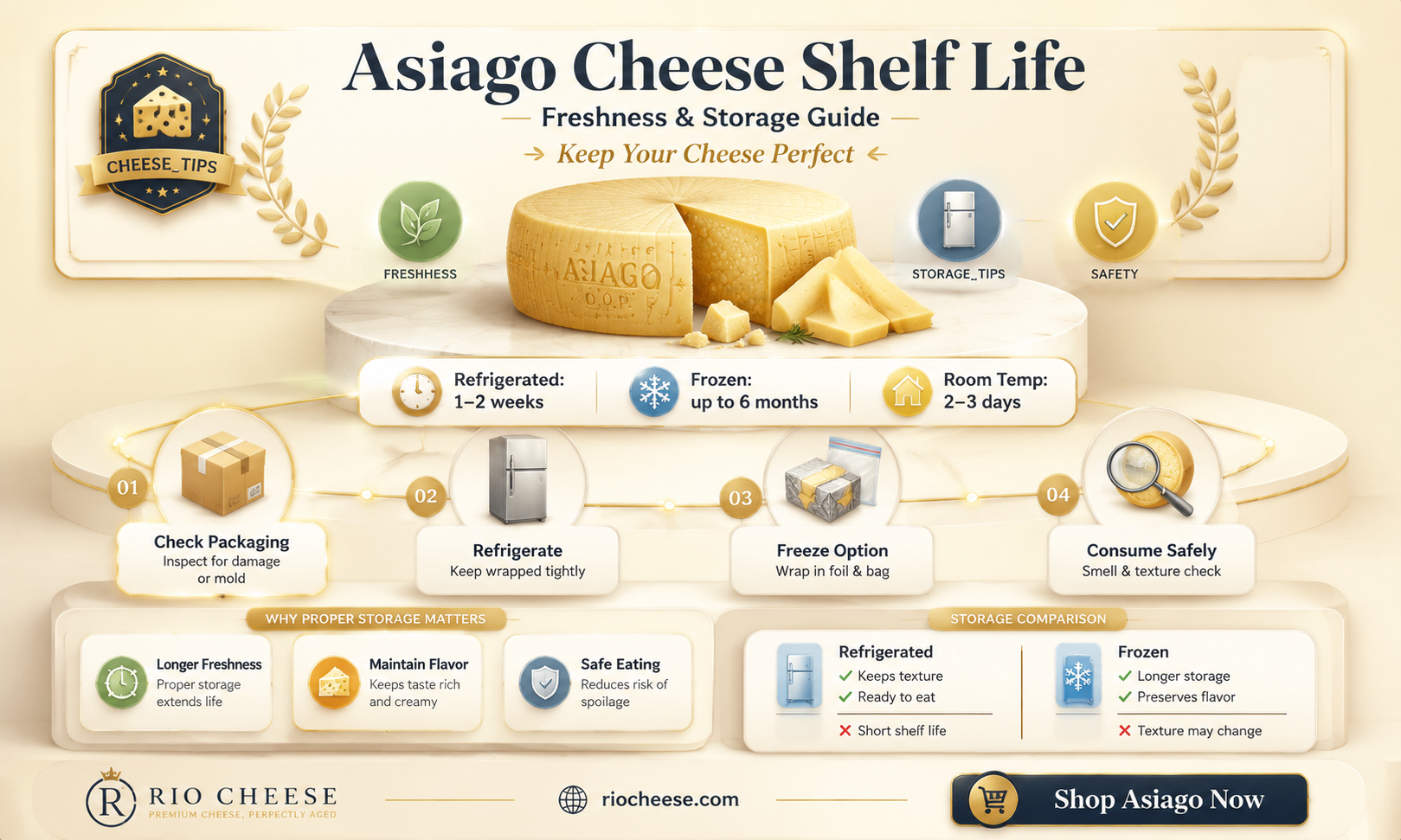
Asiago cheese, a versatile and flavorful Italian cheese, is known for its durability and long shelf life when stored properly. The aging process of Asiago cheese can vary, with some varieties aged for only a few months, while others can be aged for several years. This aging process not only affects the flavor and texture of the cheese but also its longevity. When stored in optimal conditions, such as a cool, dry place or refrigerated, Asiago cheese can last for several weeks to months beyond its best-by date. However, it's essential to monitor the cheese for any signs of spoilage, such as mold or an off odor, and discard it if any of these signs are present. Proper storage and handling are key to extending the life of Asiago cheese and ensuring it remains safe and enjoyable to consume.
Explore related products


What You'll Learn

Storage conditions for optimal freshness
To maintain the optimal freshness of Asiago cheese, it is crucial to store it under specific conditions that slow down the aging process and prevent spoilage. The ideal storage environment for Asiago cheese is a cool, dry place with a consistent temperature between 35°F and 45°F (1.6°C and 7.2°C). This temperature range helps to preserve the cheese's texture and flavor while inhibiting the growth of harmful bacteria.
In addition to temperature control, proper humidity levels are essential for storing Asiago cheese. The humidity should be maintained between 60% and 70% to prevent the cheese from drying out or becoming too moist, which can lead to mold growth. Using a cheese storage container or wrapping the cheese in wax paper or aluminum foil can help to regulate humidity levels and protect the cheese from exposure to air.
It is also important to store Asiago cheese away from strong-smelling foods, as it can absorb odors easily. This can affect the taste and aroma of the cheese, potentially making it less enjoyable to eat. Furthermore, storing the cheese in a well-ventilated area can help to prevent the buildup of ethylene gas, which is produced by some fruits and vegetables and can accelerate the aging process of the cheese.
For long-term storage, Asiago cheese can be refrigerated in the crisper drawer, which typically maintains the ideal temperature and humidity levels. However, it is important to note that refrigeration can alter the texture of the cheese, making it slightly firmer and less crumbly. To minimize this effect, it is recommended to bring the cheese to room temperature before serving to allow it to soften and develop its full flavor profile.
In summary, storing Asiago cheese under the right conditions is key to preserving its freshness and quality. By maintaining a cool, dry environment with consistent temperature and humidity levels, and by avoiding exposure to strong odors and ethylene gas, you can enjoy the delicious taste and texture of Asiago cheese for an extended period.
The Shelf Life of Havarti Cheese: A Comprehensive Guide
You may want to see also
Explore related products


![Asiago Cheese is a gluten free cheese without any cellulose powder or preservatives. Add it to your dishes or have it with wine and fruit. [ 20 oz, 1,25 lb ]](https://m.media-amazon.com/images/I/510+u0Y-tyL._AC_UL320_.jpg)


Differences in shelf life between varieties
The shelf life of Asiago cheese can vary significantly depending on the specific variety. Asiago is an Italian cheese that comes in several types, each with its own aging process and storage requirements. The two main varieties are Asiago Fresco and Asiago Stagionato. Asiago Fresco is a fresh cheese with a mild flavor and a shorter shelf life, typically lasting around 2-3 weeks when stored properly in the refrigerator. On the other hand, Asiago Stagionato is an aged cheese with a stronger flavor and a longer shelf life, which can range from 2-6 months depending on the aging process and storage conditions.
Another variety of Asiago cheese is Asiago Mezzano, which falls between Asiago Fresco and Asiago Stagionato in terms of aging and flavor intensity. Asiago Mezzano has a shelf life of approximately 1-2 months when stored in the refrigerator. It's important to note that these shelf life estimates can vary based on factors such as the cheese's moisture content, fat content, and the temperature and humidity of the storage environment.
When it comes to storing Asiago cheese, it's crucial to keep it in a cool, dry place, preferably in the refrigerator. The cheese should be wrapped tightly in plastic wrap or aluminum foil to prevent it from drying out or absorbing odors from other foods. It's also recommended to store Asiago cheese in the crisper drawer of the refrigerator, where the humidity is higher, to help maintain its texture and flavor.
In addition to the different varieties of Asiago cheese, there are also variations in the aging process that can affect the shelf life. Some Asiago cheeses are aged for a longer period, which results in a harder texture and a more intense flavor. These aged Asiago cheeses can last for several months when stored properly, but they may require special storage conditions, such as a cheese cave or a wine cellar, to maintain their quality.
In summary, the shelf life of Asiago cheese varies depending on the variety, aging process, and storage conditions. Asiago Fresco has the shortest shelf life, typically lasting 2-3 weeks, while Asiago Stagionato can last for 2-6 months. Proper storage is essential to maintain the quality and flavor of Asiago cheese, regardless of the variety.
Mastering the Art of Cold Smoking Cheese: A Time-Honored Guide
You may want to see also
Explore related products


Signs of spoilage to watch for
Asiago cheese, like many other dairy products, can spoil if not stored properly. One of the first signs of spoilage to watch for is an off odor. Fresh Asiago cheese should have a mild, nutty aroma. If it starts to smell sour, ammonia-like, or otherwise unpleasant, it's a good indication that the cheese is past its prime.
Another sign of spoilage is discoloration. Asiago cheese should have a consistent, pale yellow color. If you notice any green, blue, or black spots, it's a sign that mold is growing on the cheese. Mold can be dangerous to consume, so it's best to discard the cheese if you see any signs of it.
Texture is also an important indicator of spoilage. Fresh Asiago cheese should be firm and crumbly. If it becomes soft, slimy, or wet, it's a sign that bacteria are growing on the cheese and it's no longer safe to eat.
Finally, be sure to check the expiration date on the cheese packaging. While Asiago cheese can last for several weeks past its expiration date if stored properly, it's still a good idea to consume it before the date passes. If you're unsure whether the cheese is still good, it's always better to err on the side of caution and discard it.
The Shelf Life of Unopened Boursin Cheese: A Comprehensive Guide
You may want to see also
Explore related products
![Natural Parmesan Cheese , Crafted with fresh milk in Wisconsin, America's Dairyland , rBST free , Gluten free , Sweet, nutty, full-bodied flavor , Made with fresh milk gathered from local Wisconsin farmers . [16 oz , 1 lb ]](https://m.media-amazon.com/images/I/51-qQX2yR6L._AC_UL320_.jpg)

![Manchego Cheese is made in the region of La Mancha, using the milk of sheep of the Manchega breed, which produces a particular milk that provides the delicious and characteristic flavor to the product. It's mild and nutty flavor brings a distinctive taste to any dish. [ 24 oz , 1.5 lb ]](https://m.media-amazon.com/images/I/51UwdbfwVwL._AC_UL320_.jpg)

Proper handling and packaging techniques
To ensure the longevity of Asiago cheese, proper handling and packaging techniques are crucial. The first step in this process is to store the cheese in a cool, dry place, ideally in a refrigerator with a temperature range of 35°F to 45°F (1.6°C to 7.2°C). This temperature range helps to slow down the aging process and prevent the growth of harmful bacteria. It is also important to keep the cheese away from strong-smelling foods, as Asiago cheese can easily absorb odors.
When it comes to packaging, it is essential to use materials that are both airtight and moisture-resistant. Plastic wrap or aluminum foil can be used to wrap the cheese, but it is important to ensure that there are no gaps or holes in the packaging. Vacuum-sealed packaging is also an excellent option, as it removes all air from the package, preventing oxidation and bacterial growth.
Another important aspect of proper handling is to minimize the amount of time the cheese is exposed to air. When cutting or serving Asiago cheese, it is best to do so quickly and then immediately rewrap the remaining cheese. This helps to prevent the cheese from drying out or becoming contaminated.
In addition to these techniques, it is also important to regularly inspect the cheese for any signs of spoilage. If the cheese begins to develop an off odor, mold, or slimy texture, it should be discarded immediately. By following these proper handling and packaging techniques, Asiago cheese can last for several weeks to a few months, depending on the specific type and storage conditions.
Microwaving Yak Cheese: A Quick Guide to Perfect Melty Goodness
You may want to see also
Explore related products


![Pecorino Romano cheese will add a delicate flavor and aroma to your meals, cheese plates and salads, Naturally low in carbohydrates, Sugar-free, No trans fat [ 20 oz, 1.25 lb ]](https://m.media-amazon.com/images/I/619cMHV0EzL._AC_UL320_.jpg)


Recommended usage and pairing suggestions
Asiago cheese, with its rich and nutty flavor, is a versatile ingredient that can elevate various dishes. To make the most of this cheese, it's essential to understand its recommended usage and pairing suggestions. When using Asiago in cooking, it's best to grate it finely to ensure even distribution of flavor throughout the dish. This cheese pairs exceptionally well with pasta dishes, especially those featuring creamy sauces or roasted vegetables. Its robust flavor also complements risottos and can be used as a topping for salads or soups.
For a more gourmet experience, consider pairing Asiago with fruits such as apples or pears, or with nuts like almonds or walnuts. The contrast between the cheese's savory notes and the sweetness of the fruits or the crunch of the nuts creates a delightful culinary experience. Additionally, Asiago can be used in sandwiches or paninis, adding a layer of complexity to the flavor profile. When it comes to wine pairings, Asiago cheese goes well with medium-bodied reds like Pinot Noir or lighter whites such as Sauvignon Blanc.
To ensure the longevity of Asiago cheese, it's crucial to store it properly. Wrap the cheese tightly in plastic wrap or aluminum foil and keep it in the refrigerator. It's best to consume Asiago within a few weeks of purchase for optimal flavor and texture. If the cheese starts to develop mold or an off odor, it's time to discard it. Proper storage and timely consumption will help you enjoy the full range of Asiago's flavors and textures in your culinary creations.
Savoring Flavor: The Shelf Life of Blue Cheese Stuffed Olives
You may want to see also
Frequently asked questions
When stored properly in the refrigerator, Asiago cheese can last for about 3 to 4 weeks. It's important to wrap it tightly in plastic wrap or aluminum foil to prevent it from drying out or absorbing odors from other foods.
Yes, Asiago cheese can be frozen to extend its shelf life. It can be stored in the freezer for up to 6 months. However, the texture and flavor may change slightly upon thawing. It's best to grate or slice the cheese before freezing for easier use later.
Signs that Asiago cheese has gone bad include a strong, unpleasant odor, mold growth, and a slimy or discolored appearance. If the cheese has any of these signs, it should be discarded to avoid potential foodborne illness.


![Extra Sharp Provolone is an all-natural cheese aged for 12 months in special curing rooms to develop its signature sharp flavor. [ 16 oz, 1 lb ]](https://m.media-amazon.com/images/I/51xbO5M5uFL._AC_UL320_.jpg)


![Farms Mexican Shreds , this Shredded Mexican Blend Cheese combines mild cheddar, Monterey Jack, queso quesadilla and asadero cheeses to create a flavorful medley for your dishes. The cheese comes in resealable bags for freshness. 2 ct./ [ 24 oz , 1.5 pound ]](https://m.media-amazon.com/images/I/61TBhuGFmaL._AC_UL320_.jpg)