Randy Chandler
Cheese knives are specialized utensils designed to cut through various types of cheese with ease. They typically feature a sharp, narrow blade that allows for precise slicing and a comfortable handle for a secure grip. To use a cheese knife effectively, start by selecting the appropriate knife for the type of cheese you're working with—soft, semi-soft, semi-hard, or hard. For soft cheeses like Brie or Camembert, a knife with a thin, flexible blade is ideal, while harder cheeses like Cheddar or Parmesan require a sturdier, more rigid blade. When cutting, apply gentle pressure and use a rocking motion to slice through the cheese smoothly. For safety, always cut away from your body and keep your fingers curled under to protect them from the blade. With the right technique and the appropriate cheese knife, you can enjoy perfectly sliced cheese for your next meal or gathering.
Explore related products




What You'll Learn
- Choosing the Right Cheese Knife: Select a knife suitable for the type of cheese you're cutting
- Cutting Techniques: Use a gentle sawing motion for soft cheeses; apply more pressure for harder varieties
- Safety Tips: Always cut away from your body and keep your fingers curled under to avoid injury
- Cleaning and Maintenance: Wash cheese knives immediately after use to prevent cheese from hardening on the blade
- Etiquette: When serving, use separate knives for different types of cheese to avoid flavor mixing

Choosing the Right Cheese Knife: Select a knife suitable for the type of cheese you're cutting
Selecting the right cheese knife is crucial for both the presentation and the enjoyment of your cheese. Different cheeses have varying textures and consistencies, which require specific types of knives to cut them effectively. For instance, soft cheeses like Brie or Camembert need a knife with a thin, flexible blade to prevent crumbling, while hard cheeses like Cheddar or Parmesan require a sturdier knife with a serrated edge to slice through them cleanly.
When choosing a cheese knife, consider the type of cheese you'll be cutting most frequently. If you often serve a variety of cheeses, it might be worth investing in a set of cheese knives that cater to different types. A good cheese knife should have a comfortable handle that provides a firm grip, ensuring control and precision when cutting. The blade should be sharp and made of high-quality stainless steel to maintain its edge and resist corrosion.
For blue cheeses, which have a strong flavor and crumbly texture, a knife with a narrow blade and a forked tip can be particularly useful. This design allows you to cut through the cheese without crushing it, preserving its delicate structure. When cutting semi-hard cheeses like Gouda or Edam, a knife with a smooth, sharp blade is ideal for making clean, even slices.
In addition to the type of cheese, the size of the cheese block or wheel also plays a role in selecting the right knife. Larger blocks or wheels may require a longer knife to provide better leverage and control. Smaller pieces of cheese can be easily handled with a shorter knife, which offers more precision.
Remember to always clean your cheese knife thoroughly after use to prevent the transfer of flavors and bacteria between different types of cheese. Proper care and maintenance will ensure that your cheese knife remains effective and hygienic for years to come. By choosing the right cheese knife for the type of cheese you're cutting, you can enhance the overall cheese-tasting experience and impress your guests with beautifully presented cheese platters.
Melty Perfection: Choosing the Ideal Cheese for Raclette Night
You may want to see also
Explore related products


Cutting Techniques: Use a gentle sawing motion for soft cheeses; apply more pressure for harder varieties
To master the art of cutting cheese, one must understand the varying techniques required for different types of cheese. Soft cheeses, such as brie or camembert, require a gentle sawing motion to prevent them from crumbling or becoming too messy. This technique involves using a serrated knife and applying minimal pressure while making long, smooth strokes back and forth. On the other hand, harder cheeses like cheddar or parmesan demand more force and a different approach. For these varieties, a sharp, non-serrated knife is preferable, and a more decisive, downward pressure is necessary to make clean cuts.
When cutting soft cheeses, it's essential to ensure that the knife is at room temperature to prevent it from melting the cheese. Additionally, wiping the blade clean between cuts can help maintain the cheese's shape and prevent it from sticking to the knife. For harder cheeses, using a rocking motion with the knife can be effective, especially when cutting through thick blocks. This involves placing the tip of the knife on the cheese and rocking it back and forth while applying pressure.
One common mistake when cutting cheese is using the wrong type of knife for the job. Using a dull knife can crush the cheese, while a knife that's too sharp can cause it to shatter. It's also important to consider the size of the knife in relation to the size of the cheese block. A larger knife may be necessary for bigger blocks of cheese to ensure even and manageable cuts.
In addition to the cutting techniques, proper storage and handling of cheese knives are crucial. Knives should be stored in a dry place to prevent rusting, and it's advisable to hand wash them rather than putting them in the dishwasher to maintain their sharpness and prevent damage. Regular sharpening is also recommended to keep the knives in good condition and ensure they continue to perform effectively.
By understanding and applying these cutting techniques, cheese enthusiasts can enhance their cheese-tasting experience and impress their guests with beautifully presented cheese platters. Whether it's for a casual gathering or a formal event, the ability to cut cheese properly is a valuable skill that can elevate any occasion.
Delicious Discoveries: Unleashing the Potential of Bread and Cheese
You may want to see also
Explore related products


Safety Tips: Always cut away from your body and keep your fingers curled under to avoid injury
When handling cheese knives, safety should always be your top priority. One crucial tip is to always cut away from your body. This means that when you're slicing through a block of cheese, you should ensure that the blade is moving in a direction that is away from your torso and limbs. This simple practice can significantly reduce the risk of accidental cuts or injuries.
Another important safety measure is to keep your fingers curled under while holding the cheese. This technique, often referred to as the "claw grip," involves tucking your fingertips under your knuckles and using the knuckles as a guide for the knife. This grip not only provides better control over the knife but also protects your fingertips from coming into contact with the sharp blade.
It's also essential to use the appropriate cheese knife for the task at hand. Different types of cheese knives are designed for specific purposes, such as slicing soft cheeses, grating hard cheeses, or spreading cream cheeses. Using the wrong knife can lead to accidents, as it may not provide the necessary control or precision.
In addition to these safety tips, it's crucial to maintain your cheese knives properly. Regularly sharpening your knives ensures that they remain effective and reduces the risk of accidents caused by dull blades. It's also important to clean your knives thoroughly after each use to prevent the buildup of bacteria or other contaminants.
By following these safety guidelines, you can enjoy the process of using cheese knives while minimizing the risk of injury. Remember, a little caution and proper technique can go a long way in ensuring a safe and enjoyable cooking experience.
The Cheesy Truth: Mozzarella's Role in Chipotle's Menu
You may want to see also
Explore related products


Cleaning and Maintenance: Wash cheese knives immediately after use to prevent cheese from hardening on the blade
Immediately after using cheese knives, it's crucial to wash them to prevent cheese from hardening on the blade. This maintenance step ensures that the knives remain effective and easy to use for future cheese-cutting tasks. Hardened cheese on a knife blade can lead to difficulty in slicing through cheese, potential damage to the knife, and even the growth of bacteria if left unattended.
To properly clean cheese knives, start by rinsing them under warm water to remove any loose cheese particles. Then, apply a small amount of mild dish soap to the blade and handle, using a soft sponge or cloth to gently scrub the surface. Be sure to clean both sides of the blade and the handle thoroughly. Rinse the knife again under warm water to remove all soap residue, and then dry it immediately with a clean towel to prevent water spots and potential rusting.
For cheese knives with wooden handles, it's important to avoid soaking them in water for extended periods, as this can cause the wood to warp or crack. Instead, clean the wooden handles with a damp cloth and dry them thoroughly after washing.
In addition to regular washing, it's beneficial to occasionally sharpen cheese knives to maintain their cutting edge. A sharp knife is not only more effective at slicing through cheese but also safer to use, as it requires less force and is less likely to slip.
By following these cleaning and maintenance steps, cheese knives can remain in excellent condition, providing smooth and efficient cheese-cutting experiences for years to come.
Unveiling the Cheesy Secret: Inside Five Guys' Burger Empire
You may want to see also
Explore related products




Etiquette: When serving, use separate knives for different types of cheese to avoid flavor mixing
In the realm of cheese etiquette, one fundamental principle stands out: the importance of using separate knives for different types of cheese. This practice is not merely a matter of formality; it is essential for preserving the distinct flavors and textures of each cheese variety. When serving cheese, especially in a formal setting or at a tasting event, the use of individual knives ensures that the unique characteristics of each cheese are not compromised by the residual flavors from other types.
For instance, consider the scenario of serving a soft, creamy Brie alongside a sharp, tangy Cheddar. If the same knife is used for both, the delicate flavor of the Brie may be overshadowed by the robust taste of the Cheddar. This not only diminishes the enjoyment of the Brie but also detracts from the overall cheese-tasting experience. By using separate knives, you allow each cheese to be appreciated for its intended flavor profile, enhancing the sensory experience for the guests.
Moreover, this etiquette extends beyond flavor preservation. It also encompasses hygiene and presentation. Using separate knives prevents cross-contamination between different cheeses, which is particularly important if some guests may have allergies or dietary restrictions. Additionally, presenting each cheese with its own knife adds an element of sophistication and attention to detail, elevating the overall dining experience.
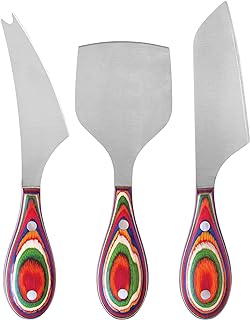
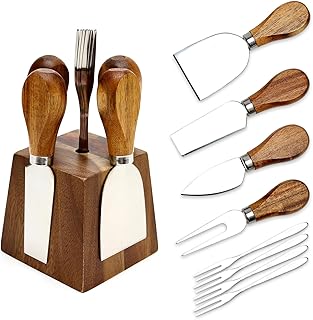
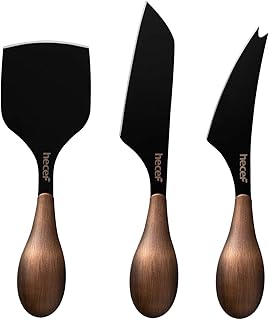
In practical terms, implementing this etiquette is straightforward. When setting up a cheese board, simply ensure that each type of cheese has its own designated knife. This can be achieved by using a cheese knife set, which typically includes knives of various shapes and sizes designed for different cheese types. For example, a soft cheese like Brie may be best served with a wide, flat knife, while a hard cheese like Cheddar might require a narrower, more pointed knife.
In conclusion, the practice of using separate knives for different types of cheese is a key aspect of cheese etiquette that enhances both the flavor and the presentation of the cheeses being served. By adhering to this principle, you not only preserve the integrity of each cheese variety but also create a more enjoyable and sophisticated dining experience for your guests.
Delicious and Easy: Mastering the Art of Cheese Wraps
You may want to see also
Frequently asked questions
The primary purpose of a cheese knife is to cut through various types of cheese with ease. Cheese knives are designed with a sharp, thin blade that can slice through soft, hard, and semi-hard cheeses without crumbling or tearing them.
To hold a cheese knife properly, grip the handle firmly with your dominant hand, placing your thumb on one side of the handle and your fingers on the other. Hold the knife at a slight angle, with the tip pointing slightly downward, for better control and precision when cutting.
Some common types of cheese knives include:
- Soft cheese knives: Ideal for cutting soft cheeses like Brie or Camembert, these knives have a wide, thin blade that prevents the cheese from sticking.
- Hard cheese knives: Designed for cutting hard cheeses like Parmesan or Cheddar, these knives have a narrower, thicker blade for more precise slicing.
- Semi-hard cheese knives: Suitable for cheeses like Gouda or Edam, these knives have a medium-width blade that can handle the cheese's texture.
To clean and maintain a cheese knife, wash it by hand with warm, soapy water immediately after use. Dry it thoroughly with a clean towel to prevent water spots and potential rust. Store the knife in a knife block or on a magnetic strip to protect the blade and keep it sharp. Regularly sharpening the blade with a honing rod or sharpening stone will ensure it remains effective for cutting cheese.
While cheese knives are primarily designed for cutting cheese, they can also be used for other purposes in the kitchen. For example, they can be used to spread butter or jam on toast, cut through soft fruits like peaches or nectarines, or even slice through delicate desserts like cheesecake or mousse. However, it's essential to clean the knife thoroughly between uses to prevent flavor transfer and maintain hygiene.