Andy Montoya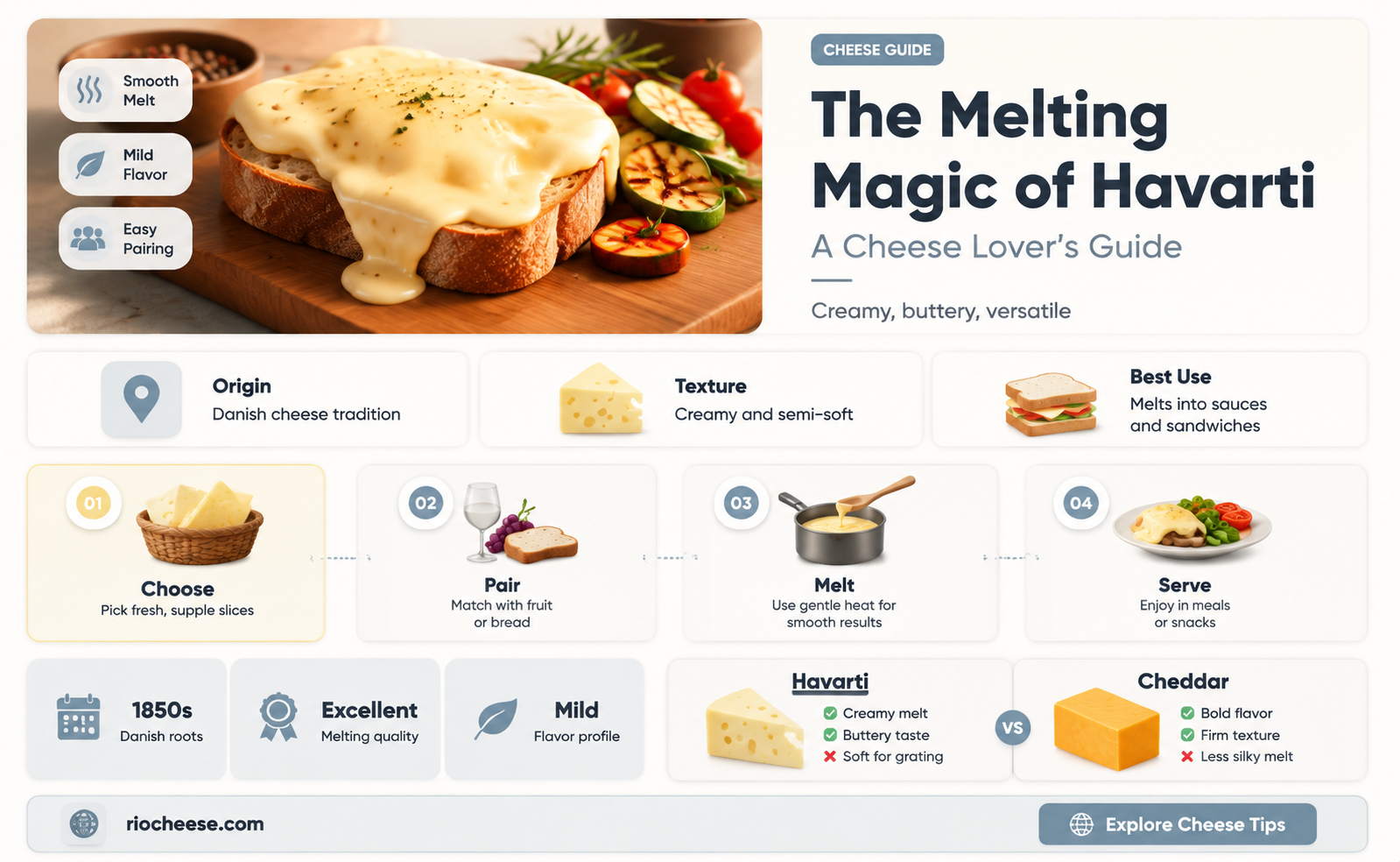
Havarti cheese, known for its smooth texture and mild flavor, is a popular choice for various culinary applications. One common question among cheese enthusiasts and home cooks alike is whether Havarti cheese melts well. The melting properties of cheese are influenced by factors such as moisture content, fat content, and the presence of certain proteins and enzymes. Havarti cheese typically has a good balance of these factors, making it a suitable option for melting. When heated, Havarti cheese tends to melt smoothly and evenly, making it an excellent choice for dishes like grilled cheese sandwiches, cheese platters, and recipes that require a melted cheese topping. Its mild flavor also allows it to complement a wide range of ingredients without overpowering them.
Explore related products

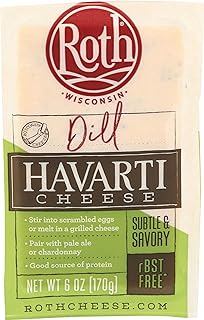
![Havarti Cheese Slices are effortlessly incorporated into your favorite meal. Plus, these slices melt without a hassle, making them the perfect match for a hearty burger or a grilled cheese sandwich. [ 24 oz , 1.5 lb ]](https://m.media-amazon.com/images/I/51mKR9YSn-L._AC_UL320_.jpg)


What You'll Learn
- Melting Properties: Havarti's melting qualities make it ideal for various dishes
- Nutritional Content: Understand the nutritional benefits of havarti when melted
- Culinary Uses: Explore popular dishes that feature melted havarti cheese
- Comparison to Other Cheeses: How does havarti's melting compare to cheeses like cheddar or mozzarella
- Tips for Perfect Melting: Techniques to achieve the best texture and flavor when melting havarti

Melting Properties: Havarti's melting qualities make it ideal for various dishes
Havarti cheese, known for its smooth texture and mild flavor, boasts exceptional melting properties that make it a versatile ingredient in a wide array of dishes. Its ability to melt evenly and achieve a creamy consistency without becoming greasy or separating is a result of its high moisture content and the specific proteins it contains. These characteristics make Havarti an excellent choice for applications where a smooth, melted cheese is desired, such as in sauces, soups, and casseroles.
One of the key benefits of using Havarti in cooking is its ability to blend seamlessly with other ingredients, enhancing the overall flavor profile without overpowering it. For instance, when melted into a béchamel sauce, Havarti adds a rich, velvety texture and a subtle tanginess that complements the other components of the dish. Similarly, in a grilled cheese sandwich, Havarti melts beautifully, creating a gooey, stretchy interior that contrasts delightfully with the crispy exterior.
Havarti's melting qualities also make it an ideal cheese for fondue. When combined with other cheeses, such as Gruyère and Emmental, Havarti contributes to a smooth, cohesive mixture that is perfect for dipping bread, vegetables, and meats. Its mild flavor allows it to meld well with the other cheeses, while its excellent melting properties ensure that the fondue remains consistently smooth and easy to dip into.
In addition to its culinary applications, Havarti's melting properties are also beneficial for creating visually appealing dishes. For example, when melted over a baked potato or a piece of fish, Havarti forms a golden-brown crust that adds an attractive, appetizing finish to the dish. This makes it a popular choice for chefs and home cooks alike who are looking to add both flavor and visual appeal to their creations.
Overall, Havarti cheese's exceptional melting qualities make it a valuable ingredient in a variety of dishes, from simple comfort foods to more complex culinary creations. Its ability to melt smoothly and evenly, combined with its mild flavor and high moisture content, ensures that it can enhance the texture and taste of any dish it is added to.
The Art of Smoking Cheese: A Melty Mistake to Avoid
You may want to see also
Explore related products


Nutritional Content: Understand the nutritional benefits of havarti when melted
Havarti cheese, when melted, offers a range of nutritional benefits that make it a valuable addition to a balanced diet. One of the key advantages of melted havarti is its high calcium content, which is essential for maintaining strong bones and teeth. A single serving of melted havarti can provide up to 20% of the recommended daily intake of calcium, making it an excellent choice for individuals looking to boost their calcium levels.
In addition to calcium, melted havarti is also a good source of protein, which is crucial for building and repairing tissues in the body. Protein is also important for maintaining muscle mass and supporting immune function. A serving of melted havarti can provide around 6 grams of protein, which is comparable to other protein-rich foods like eggs and chicken.
Another benefit of melted havarti is its vitamin content. This cheese is particularly high in vitamin B12, which is essential for the production of red blood cells and the maintenance of a healthy nervous system. Vitamin B12 is also important for the synthesis of DNA and the metabolism of fats and carbohydrates. A serving of melted havarti can provide up to 20% of the recommended daily intake of vitamin B12.
Furthermore, melted havarti contains a variety of other important nutrients, including phosphorus, magnesium, and zinc. Phosphorus is essential for the production of ATP, the energy currency of the body, while magnesium plays a role in over 300 biochemical reactions, including muscle contraction and nerve function. Zinc is important for immune function, wound healing, and the synthesis of proteins and DNA.
It's important to note that while melted havarti does offer a range of nutritional benefits, it is also high in fat and calories. Therefore, it should be consumed in moderation as part of a balanced diet. For individuals looking to reduce their fat intake, it may be beneficial to choose a lower-fat variety of havarti or to use it sparingly as a flavor enhancer in dishes.
In conclusion, melted havarti cheese is a nutritious food that can provide a range of important vitamins and minerals, including calcium, protein, vitamin B12, phosphorus, magnesium, and zinc. When consumed in moderation, it can be a valuable addition to a balanced diet, supporting bone health, muscle function, and overall well-being.
Easy Tips: Removing Melted Cheese from Dishes Hassle-Free
You may want to see also
Explore related products


Culinary Uses: Explore popular dishes that feature melted havarti cheese
Havarti cheese, known for its smooth texture and mild flavor, is a versatile ingredient that melts beautifully, making it a popular choice for various culinary applications. One of the most iconic dishes featuring melted havarti is the Danish open-faced sandwich known as "smørrebrød." In this dish, havarti is often melted over a slice of rye bread topped with a variety of ingredients such as smoked salmon, roast beef, or chicken salad. The melted cheese adds a creamy, rich layer that complements the other flavors and textures.
Another dish that showcases the melting properties of havarti is the "havarti cheese sauce." This sauce is a staple in many Scandinavian cuisines and is made by melting havarti cheese with milk, butter, and seasonings. It is often served over vegetables, pasta, or as a dip for bread. The sauce's smooth and velvety texture is a testament to havarti's excellent melting qualities.
In addition to these traditional uses, havarti cheese has found its way into modern culinary creations. For instance, it is frequently used in gourmet grilled cheese sandwiches, where its mild flavor and gooey texture pair well with a variety of fillings such as caramelized onions, mushrooms, or prosciutto. Havarti is also a popular choice for cheese boards, where it can be melted and served alongside crackers, fruits, and nuts.
When using havarti cheese in cooking, it is important to note that it melts best at a medium to low heat. This ensures that the cheese does not burn or become too greasy. Additionally, havarti can be combined with other cheeses to create unique flavor profiles. For example, blending havarti with a sharper cheese like cheddar can add depth and complexity to dishes like macaroni and cheese or cheese soufflés.
In conclusion, havarti cheese's melting properties make it a valuable ingredient in a wide range of dishes, from traditional Scandinavian cuisine to modern culinary innovations. Its versatility and mild flavor allow it to enhance various recipes without overpowering the other ingredients.
Discover the Best Spots to Purchase Land O'Lakes Extra Melt Cheese
You may want to see also
Explore related products



Comparison to Other Cheeses: How does havarti's melting compare to cheeses like cheddar or mozzarella?
Havarti cheese, known for its smooth texture and mild flavor, melts differently compared to other popular cheeses like cheddar and mozzarella. While cheddar cheese tends to have a higher melting point and can become slightly grainy when heated, havarti melts smoothly and evenly, making it an excellent choice for dishes requiring a creamy consistency. Mozzarella, on the other hand, has a lower melting point and stretches more than havarti, which can be desirable for certain applications like pizza toppings.
In terms of melting characteristics, havarti falls somewhere between cheddar and mozzarella. It doesn't stretch as much as mozzarella but melts more smoothly than cheddar. This makes havarti a versatile cheese for various culinary uses, from sandwiches and paninis to casseroles and gratins. When melted, havarti retains its mild flavor, which complements a wide range of ingredients without overpowering them.
One of the key advantages of havarti over other melting cheeses is its ability to create a rich, creamy sauce without the need for additional thickeners. This is due to its high moisture content and the way its proteins break down when heated. In contrast, cheddar can become oily and separate when melted, while mozzarella may require more heat to achieve the desired melting consistency.
When comparing havarti to other cheeses in terms of melting, it's also important to consider the fat content. Havarti typically has a higher fat content than cheddar, which contributes to its smooth melting properties. Mozzarella, on the other hand, has a lower fat content, which affects its melting behavior and stretchiness.
In summary, havarti cheese offers a unique melting profile that combines the best qualities of cheddar and mozzarella. Its smooth, even melting and mild flavor make it a popular choice for a variety of dishes, from casual sandwiches to more sophisticated culinary creations.
The Melting Mystery: What Happens to Cheese Curds When Heated?
You may want to see also
Explore related products


![Havarti is made in Denmark according to the 100 year old recipe. The lactic acid cultures for Havarti are grown in the dairy where it is produced, which gives it its unique, mild taste. [ 16 oz , 1 lb ]](https://m.media-amazon.com/images/I/51D1klKGO9L._AC_UL320_.jpg)

Tips for Perfect Melting: Techniques to achieve the best texture and flavor when melting havarti
To achieve the perfect melt with havarti cheese, it's essential to understand its unique properties. Havarti, a semi-soft Danish cheese, melts beautifully due to its high moisture content and smooth texture. However, to get the best results, you need to employ specific techniques that enhance its natural qualities.
First, consider the temperature. Havarti melts optimally between 325°F and 350°F (165°C and 175°C). Going too high can cause the cheese to separate and become greasy, while too low may not achieve a smooth melt. Preheat your oven, grill, or stovetop to the appropriate temperature before adding the cheese.
Next, think about the application method. Grating or thinly slicing havarti will allow it to melt more evenly and quickly. If you're using a block of cheese, consider scoring it lightly with a knife to help it melt more uniformly. When layering havarti on dishes like sandwiches or casseroles, place it directly under the broiler or in the oven for a few minutes to achieve a golden-brown crust.
Another crucial factor is the addition of liquids. While havarti can melt on its own, adding a small amount of liquid can enhance its texture and flavor. A splash of white wine, beer, or even water can help create a creamy, velvety consistency. Be cautious not to add too much liquid, as this can make the cheese rubbery.
Finally, consider pairing havarti with complementary ingredients. Its mild, buttery flavor pairs well with a variety of foods, from meats like ham and bacon to vegetables like mushrooms and spinach. Experiment with different combinations to find your perfect match.
By following these tips, you'll be able to achieve the perfect melt with havarti cheese, resulting in a deliciously smooth and flavorful dish every time.
The Melting Mystery: Dubliner Cheese's Unique Properties Explained
You may want to see also
Frequently asked questions
Yes, Havarti cheese melts exceptionally well due to its high moisture content and smooth texture, making it a popular choice for dishes that require melted cheese.
The best way to melt Havarti cheese is to use a double boiler or a pan over low heat, stirring occasionally to ensure even melting and to prevent the cheese from burning or becoming too greasy.
Yes, Havarti cheese can often be used as a substitute for other melting cheeses like mozzarella, cheddar, or Gruyère in recipes, as it has a mild flavor and excellent melting properties.
Melted Havarti cheese is commonly used in a variety of dishes, including grilled cheese sandwiches, cheese platters, fondue, casseroles, and as a topping for baked potatoes or burgers.
Havarti cheese has a relatively low melting point compared to other cheeses, which makes it ideal for melting. It typically starts to melt at around 150°F (65°C) and is fully melted by 180°F (82°C).



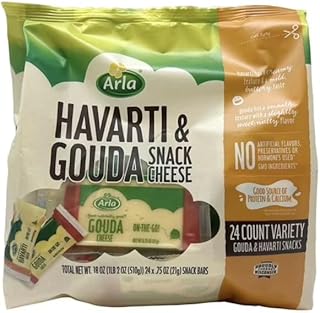
![Havarti & Gouda Snack Cheese , Havarti & Gouda Cheese Snack bars make a delicious, better-for-you snack, especially if you need protein on-the-go. Plus, with two varieties of natural cheese in every bag, each day can be different and fun. [18 oz , 1 lb ] .. 24 ct.](https://m.media-amazon.com/images/I/61d2Eyis1OL._AC_UL320_.jpg)