Frederic Melton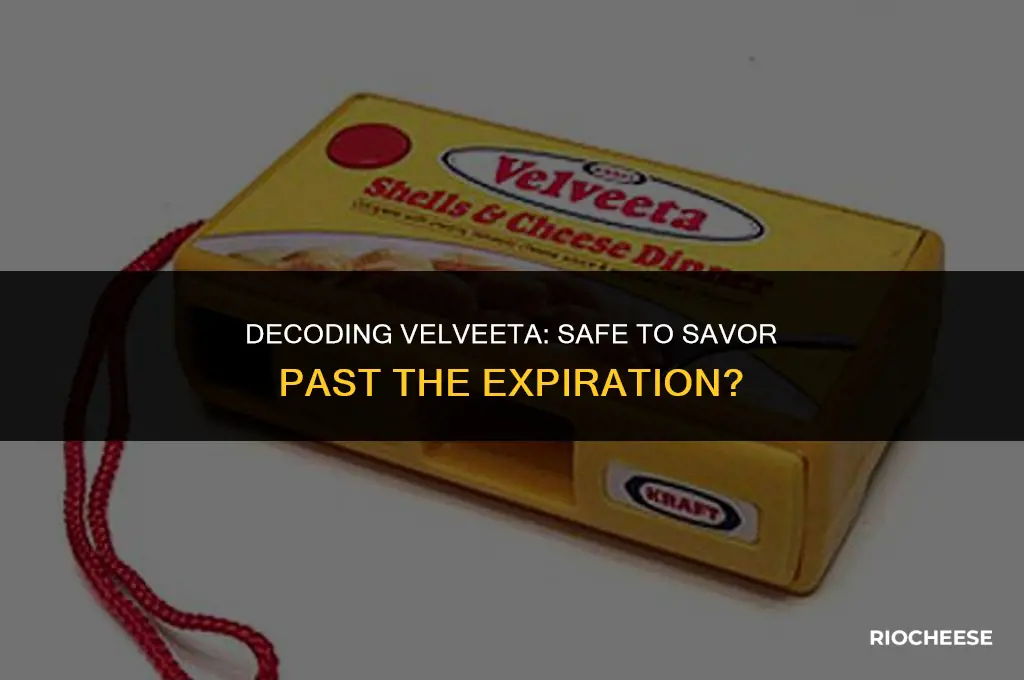
When it comes to food safety, understanding the guidelines surrounding expiration dates is crucial. Velveeta cheese, a popular processed cheese product, is no exception. The question of whether Velveeta can be consumed after its expiration date is a common one, and the answer involves a nuanced understanding of food labeling and safety standards. Expiration dates on food products, including Velveeta, indicate the last date the manufacturer guarantees the product's quality and safety. However, this doesn't necessarily mean the cheese becomes unsafe to eat immediately after this date. In many cases, processed cheeses like Velveeta can still be consumed for a short period after the expiration date if stored properly, though the taste and texture may start to degrade. It's important to note that food safety can vary based on factors such as storage conditions, the type of product, and individual health considerations. Always exercise caution and use your best judgment when deciding whether to consume expired food products.
Explore related products


What You'll Learn
- Understanding Expiration Dates: Clarify the meaning of expiration dates on food products, including Velveeta cheese
- Risks of Consuming Expired Cheese: Discuss potential health risks associated with eating cheese past its expiration date
- Signs of Spoilage: Describe visual, olfactory, and textural indicators that Velveeta cheese has spoiled
- Proper Storage Tips: Offer advice on how to store Velveeta cheese to maximize its shelf life
- Alternatives to Expired Cheese: Suggest substitutes or ways to use expired cheese safely, such as in cooking or baking

Understanding Expiration Dates: Clarify the meaning of expiration dates on food products, including Velveeta cheese
Expiration dates on food products, including Velveeta cheese, are a crucial aspect of food safety and quality control. These dates indicate the period during which the product is expected to maintain its optimal quality and safety when stored properly. However, the specific meaning of these dates can vary depending on the type of product and the regulations in different regions.
For Velveeta cheese, the expiration date typically refers to the "best by" date, which is a recommendation from the manufacturer regarding the peak quality of the product. This date is not a strict deadline for consumption but rather a guideline to ensure the best taste and texture. After this date, the cheese may start to deteriorate in quality, becoming less creamy and more prone to mold growth.
It's important to note that the expiration date is different from the "sell by" date, which is used by retailers to manage inventory and ensure products are sold before they spoil. The "sell by" date is usually earlier than the "best by" date to allow for some time in transit and on the shelves.
When it comes to consuming Velveeta cheese after the expiration date, it's essential to inspect the product for any signs of spoilage, such as mold, off-odors, or sliminess. If the cheese appears to be in good condition and has been stored properly in the refrigerator, it may still be safe to eat for a short period after the expiration date. However, the quality and safety of the cheese will gradually decline, so it's best to consume it as soon as possible after the recommended date.
In summary, understanding expiration dates on food products like Velveeta cheese involves recognizing the difference between "best by" and "sell by" dates, inspecting the product for signs of spoilage, and making informed decisions about consumption based on the product's condition and storage history.
Can Lizards Eat Cheese? A Surprising Truth Revealed
You may want to see also
Explore related products



Risks of Consuming Expired Cheese: Discuss potential health risks associated with eating cheese past its expiration date
Consuming expired cheese can pose several health risks, primarily due to the growth of harmful bacteria and mold. As cheese ages past its expiration date, it becomes a breeding ground for pathogens such as Listeria monocytogenes, Salmonella, and Escherichia coli (E. coli). These bacteria can cause foodborne illnesses, leading to symptoms like nausea, vomiting, diarrhea, and abdominal cramps. In severe cases, food poisoning from expired cheese can result in hospitalization or even death, particularly in vulnerable populations such as the elderly, pregnant women, and individuals with weakened immune systems.
In addition to bacterial contamination, expired cheese may also develop harmful molds. Some molds produce mycotoxins, which are toxic compounds that can cause a range of health issues, including allergic reactions, respiratory problems, and in some cases, cancer. While some molds are visible, others may not be, making it difficult to determine if the cheese is safe to eat based solely on appearance.
The risk of consuming expired cheese is further compounded by the fact that many types of cheese, including Velveeta, are processed and contain additives that can degrade over time. These additives may include preservatives, artificial flavors, and coloring agents, which can become harmful if consumed after their expiration date. For example, some preservatives can become carcinogenic when they break down, while artificial flavors and colors may cause allergic reactions or other adverse health effects.
To minimize the risks associated with eating expired cheese, it is essential to follow proper food safety guidelines. Always check the expiration date on the packaging and discard any cheese that is past this date. If you are unsure whether a cheese is safe to eat, it is best to err on the side of caution and throw it away. Additionally, storing cheese properly can help extend its shelf life and reduce the risk of contamination. Cheese should be stored in the refrigerator at a temperature of 40°F (4°C) or below, and it should be wrapped tightly to prevent exposure to air and moisture.
In conclusion, consuming expired cheese can pose significant health risks due to bacterial and mold contamination, as well as the degradation of additives. To protect yourself and your family, it is crucial to follow food safety guidelines, check expiration dates, and store cheese properly. If in doubt, always discard expired cheese to avoid potential health hazards.
Expecting Moms: Is Laughing Cow Cheese Safe During Pregnancy?
You may want to see also
Explore related products



![Original Cheese Spread , Authentic southern flavor , served as a hot or cold dip, sandwich spread or burger topping. It is made with 100% real Wisconsin sharp cheddar and Hellmann's Mayonnaise. [ 20 oz , 1.25 lb ]](https://m.media-amazon.com/images/I/41aiKHkJpcL._AC_UL320_.jpg)
Signs of Spoilage: Describe visual, olfactory, and textural indicators that Velveeta cheese has spoiled
Velveeta cheese, known for its smooth texture and rich flavor, can exhibit several signs of spoilage if consumed after its expiration date. Visually, spoiled Velveeta may develop discoloration, ranging from off-white to greenish hues, indicating the growth of mold or bacteria. The surface might also show signs of drying out or cracking, which can occur when the cheese is exposed to air for extended periods.
Olfactorily, the aroma of spoiled Velveeta can be quite distinct. Instead of the usual mild, cheesy scent, the cheese may emit a sour, pungent, or ammonia-like smell. This change in odor is a clear indication that the cheese has undergone chemical changes and is no longer safe to eat.
Texturally, spoiled Velveeta can become slimy or develop a rubbery consistency. This alteration in texture is often accompanied by a loss of the cheese's characteristic meltability. If the cheese does not melt smoothly or begins to separate when heated, it is a strong sign that it has spoiled.
In addition to these primary indicators, there are other subtle signs that Velveeta cheese may have gone bad. For instance, the packaging might show signs of bloating or leakage, which can occur when gas-producing bacteria have contaminated the cheese. Furthermore, if the cheese has been stored improperly, such as in a refrigerator that is not at the correct temperature, the risk of spoilage increases significantly.
To avoid consuming spoiled Velveeta, it is crucial to check the expiration date and inspect the cheese carefully before eating. If any of the signs of spoilage are present, it is best to discard the cheese to prevent potential foodborne illnesses. Proper storage, including keeping the cheese refrigerated at the appropriate temperature and using airtight containers, can help extend its shelf life and maintain its quality.
Cheesy Dilemma: Enjoying Cheese Sticks with Braces - Yes or No?
You may want to see also
Explore related products
![Sharp Cheddar Shreds , Naturally aged to deliver the distinctive bold flavor, Shredded Sharp Cheddar Cheese is an all-natural and tasty way to boost your recipes. The bags can be resealed to help maintain freshness. This cheese is aged for six months and is made with all-natural ingredients. [ 48 oz , 3 lb ] .. 2 ct](https://m.media-amazon.com/images/I/61uNCGm4OEL._AC_UL320_.jpg)


![Whipped Cream Cheese , Gluten-free and free of any artificial preservatives, dyes, or flavors, this spread is a delicious choice for all of your cream cheese needs. Made with milk from US dairy farms, this product contains 0 grams of trans fat per serving. 24 pk [ 24 oz , 1.5 lb ] .](https://m.media-amazon.com/images/I/41qdfnhDXkL._AC_UL320_.jpg)

Proper Storage Tips: Offer advice on how to store Velveeta cheese to maximize its shelf life
To maximize the shelf life of Velveeta cheese, it's crucial to store it properly. After opening, Velveeta should be tightly wrapped in plastic wrap or aluminum foil to prevent air exposure, which can lead to drying out and spoilage. It's best to store it in the refrigerator, ideally in the crisper drawer where the humidity is higher, to keep the cheese moist. If you're not planning to use the Velveeta within a week, consider freezing it. Wrap it tightly in plastic wrap followed by a layer of aluminum foil to prevent freezer burn. When you're ready to use it, thaw it in the refrigerator overnight. Avoid storing Velveeta in direct sunlight or near heat sources, as this can cause the cheese to melt and spoil more quickly.
It's also important to note that Velveeta's shelf life can be affected by how it's handled. Always use clean utensils when serving, and avoid cross-contamination by storing it separately from other foods, especially those with strong odors. If you notice any signs of spoilage, such as mold, sliminess, or an off smell, it's best to discard the cheese, even if it's before the expiration date. Proper storage can help extend the life of your Velveeta, but it's always better to err on the side of caution when it comes to food safety.
Delicious Pairings: What to Eat with Mozzarella Cheese Sticks
You may want to see also
Explore related products


Alternatives to Expired Cheese: Suggest substitutes or ways to use expired cheese safely, such as in cooking or baking
If you find yourself with expired cheese, it's not necessarily destined for the trash. While it's crucial to inspect the cheese for any signs of spoilage such as mold, sliminess, or an off odor, there are several ways to utilize cheese that's past its prime, especially in cooking and baking where the flavors can still be salvaged.
One option is to grate the expired cheese and use it as a topping for dishes like pasta, pizzas, or casseroles. The heat from cooking can help kill off any potential bacteria, and the cheese will add a rich flavor to your meal. Another idea is to incorporate it into a cheese sauce or fondue, where the melted cheese blends with other ingredients, masking any less desirable flavors that may have developed.
For baking, expired cheese can be a great addition to bread, muffins, or scones, adding a savory element to your baked goods. It can also be used in quiches or frittatas, where the cheese will contribute to the overall flavor profile without being the star of the dish.
When using expired cheese, it's important to remember that the texture and flavor may not be as good as fresh cheese, so you may need to adjust your recipe accordingly. Additionally, always use your best judgment and err on the side of caution when consuming expired food products.
In summary, while it's not advisable to eat expired cheese as is, there are several creative ways to use it in cooking and baking, ensuring that it doesn't go to waste and still contributes to delicious meals.
Parmesan Past Its Prime: A Guide to Handling Expired Cheese
You may want to see also
Frequently asked questions
It is generally not recommended to eat Velveeta cheese after the expiration date as the quality and safety cannot be guaranteed.
Velveeta cheese typically lasts for about 2 to 3 months before expiring when stored properly in the refrigerator.
After Velveeta cheese expires, it may start to spoil, develop an off smell, and the texture could become slimy or moldy, making it unsafe to consume.
Yes, you can freeze Velveeta cheese to extend its shelf life. It is recommended to wrap it tightly in plastic wrap or aluminum foil and store it in the freezer for up to 2 months.
You can tell if Velveeta cheese has gone bad if it has an off smell, slimy or moldy texture, or if it has been stored for too long past the expiration date.